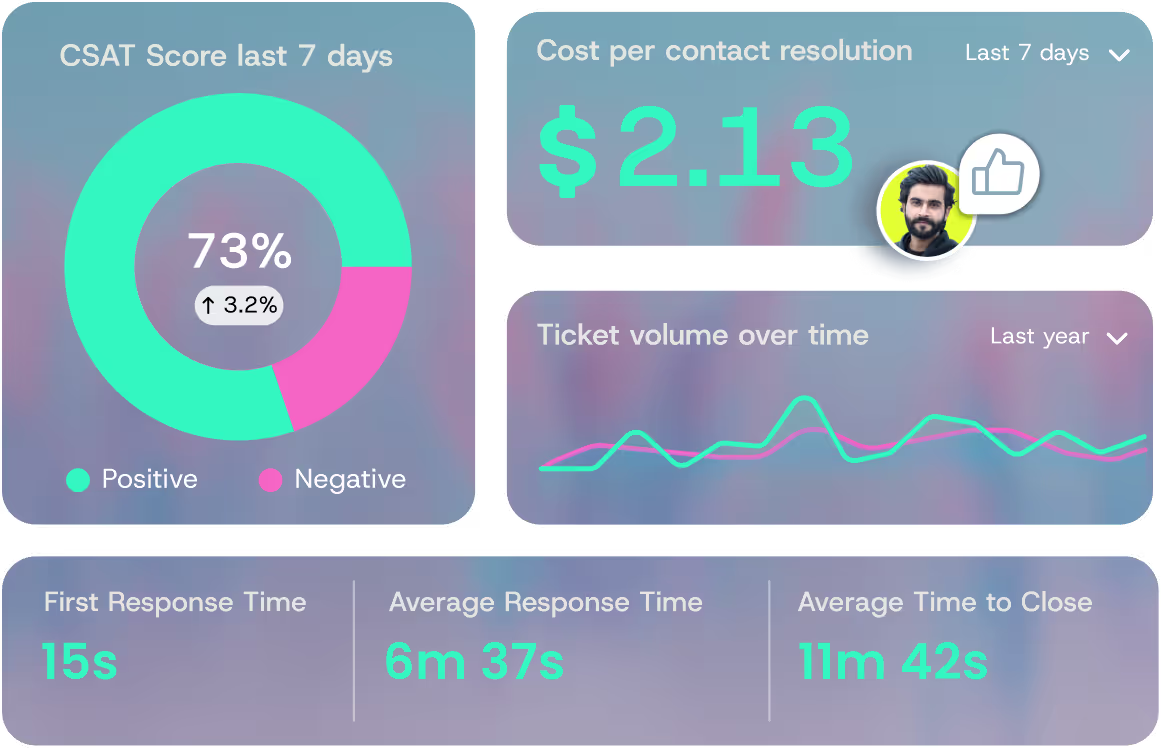
How to Reduce Call Center Cost: Helpful Tips
Call center cost reduction involves identifying inefficiencies in operations and fixing them without hurting the customer experience. To lower costs effectively, we must look at where the budget goes, such as labor, technology, and facilities.
The reduction comes from operational efficiency and agent optimization, not just cutting staff. When the operators have the right tools, they work faster and make fewer mistakes.
We believe that balancing speed with quality maintains user satisfaction while keeping expenses in check. At QueryPal, we focus on resolution rather than deflection to ensure costs go down naturally.
Our approach utilizes an intelligence layer to handle repetitive tasks so humans can focus on complex work. If you want a lean, effective operation, keep reading to find actionable strategies.
For a broader, cross-functional approach beyond contact centers, these strategies to reduce customer costs can help you prioritize savings levers.
Main Cost Categories in Call Centers
To save money, we must first understand exactly where the money is being spent within the daily operations of the department.
- Labor: This usually accounts for 60-70% of the budget, making it the largest expense in call center operations. It includes salaries, benefits, training, and management layer costs. Studies show this percentage can range from 60% to 80% depending on the organization's structure and location.
- Infrastructure: This covers the technology needed to run, including telecom, routing software, and licenses.
- Overhead: These are fixed costs like office rent, utilities, desk equipment, and necessary compliance requirements.
- QA & Management: This involves supervisor salaries, coaching period, and hours dedicated to reviewing calls for quality.
- Turnover & Hiring: Replacing operators is expensive, covering recruitment, onboarding, and productivity gaps when staff leave.
A practical first step is measuring efficiency and outcomes—this guide on call center productivity metrics explains what to track and how to calculate it.
What Is the Cost Per Call? And Why Does It Matter?
Cost per call (CPC) tells us exactly how much money it takes to handle a single phone conversation. It puts a price tag on every interaction we have with a customer.
When we know this number, we can make better decisions. If the expense is too high, it means our processes might be slow, or our tools are outdated.
This metric helps leadership understand efficiency because it combines labor, technology, and time. Tracking CPC allows us to see if changes in our strategy are working.
For example, if we implement a new training program, the CPC should drop. It is the baseline for measuring financial health.
How to Calculate Cost Per Call
Calculating this metric is straightforward, but you must ensure you include all relevant expenses to get an accurate number.
Total Call Center Costs ÷ Total Calls Handled
Total call center costs include labor expenses (agent salaries, benefits, management compensation), technology costs (software subscriptions, CRM platforms, telephony infrastructure), overhead expenses (rent, utilities, equipment), training and development costs, and quality assurance program expenses.
These combined operational and capital expenses should be divided by the total number of calls handled during the measurement period to determine your true cost per call.
Several operational factors can drastically change this number, so we must watch them closely to keep our total expenses low.
- High handle times: Long calls are pricier because operators can handle fewer users per hour.
- Repeat contacts: If a customer calls back, we pay for the same issue twice.
- Inefficient routing: Transferring calls between departments wastes effort and frustrates the caller.
- Expensive tools: Paying for software features that we do not use drives up the cost.
- Labor inefficiencies: Paying for idle periods when call volume is low wastes the budget.
Improve the Call Routing Practices to Lower the Operational Costs
Routing is one of the highest-impact cost levers available to support leaders today. When a call connects to the wrong operator, it wastes the effort of everyone.
The operator has to figure out that they cannot help, and the customer has to repeat their story. This drives up handle time and lowers satisfaction.
We focus on getting the caller to the right person instantly. Misrouted calls reduce First Call Resolution (FCR) rates because the first person cannot solve the problem.
By improving how calls flow, we save minutes on every interaction. Over thousands of calls, these saved minutes add up to significant call center cost savings.
Smart Routing Reduces Repeated Work Across the Board
Smart routing systems use advanced algorithms and customer data to match callers with the most qualified agent immediately.
These systems analyze factors like customer history, issue complexity, agent skill sets, and current availability to make intelligent routing decisions in real-time.
By leveraging skills-based routing combined with CRM integration, organizations can dramatically reduce transfer rates and improve first call resolution.
Smart routing ensures that every customer is paired with the operator best suited to solve their specific problem right away.
- Use skills-based routing: Direct calls to operators who have the specific training or skills needed.
- Use Interactive Voice Response (IVR) paths matching intent: Design menu options that clearly reflect the most common reasons people call.
- Use data to auto-route: Utilize CRM data to identify high-value customers or ongoing issues immediately.
- Reduce unnecessary transfers: Limit the frequency a customer moves to ensure ownership.
Fewer transfers mean the call ends sooner. When we match the problem to the solver immediately, we cut out the "middleman." This efficiency directly lowers the cost per call in call center operations.
When is AI-Driven Routing Good to Use?
Intelligence layers are most beneficial when call volume is high, and issues vary greatly. Standard menus can be frustrating, but an Agentic UI understands needs before a human speaks.
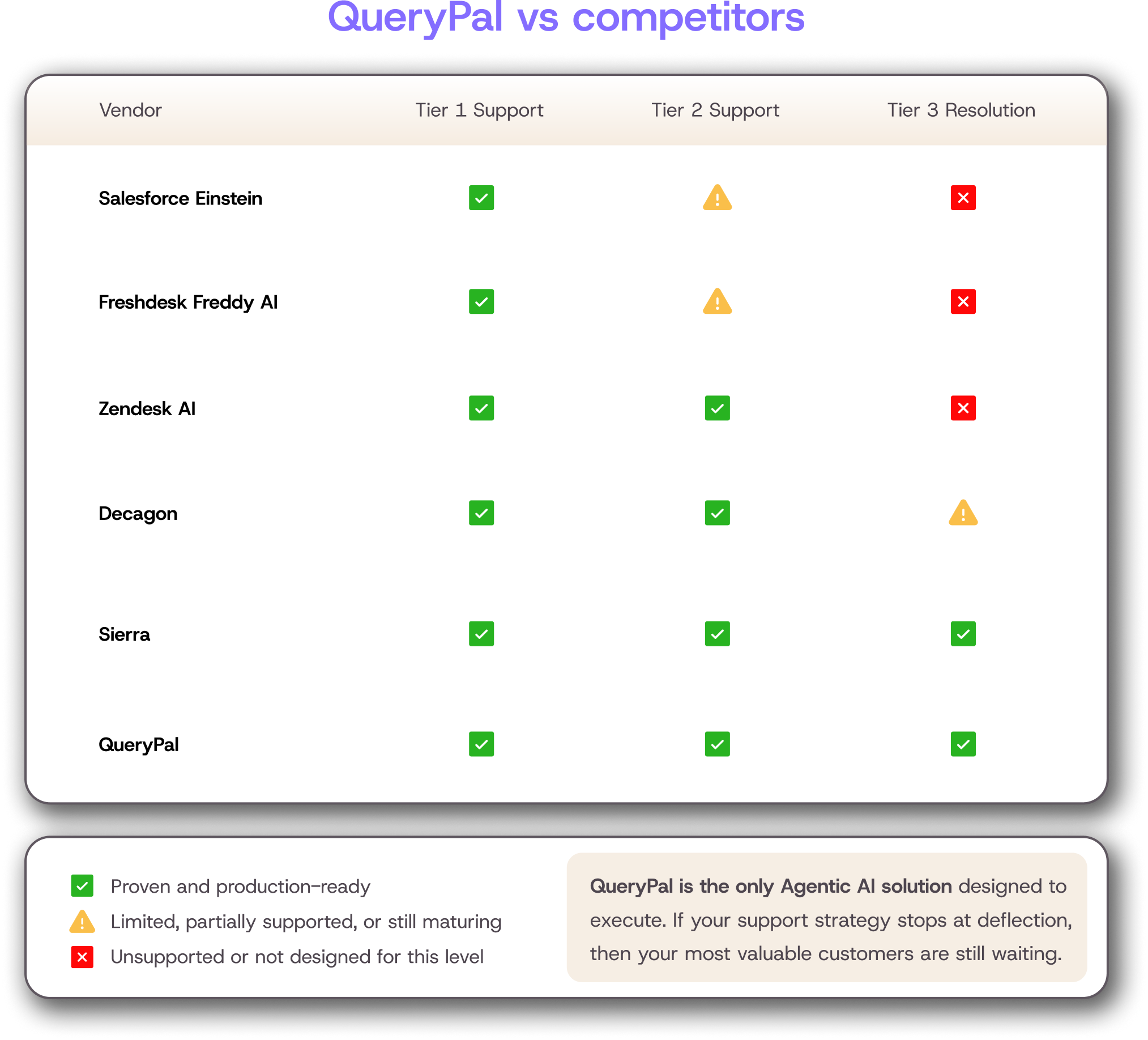
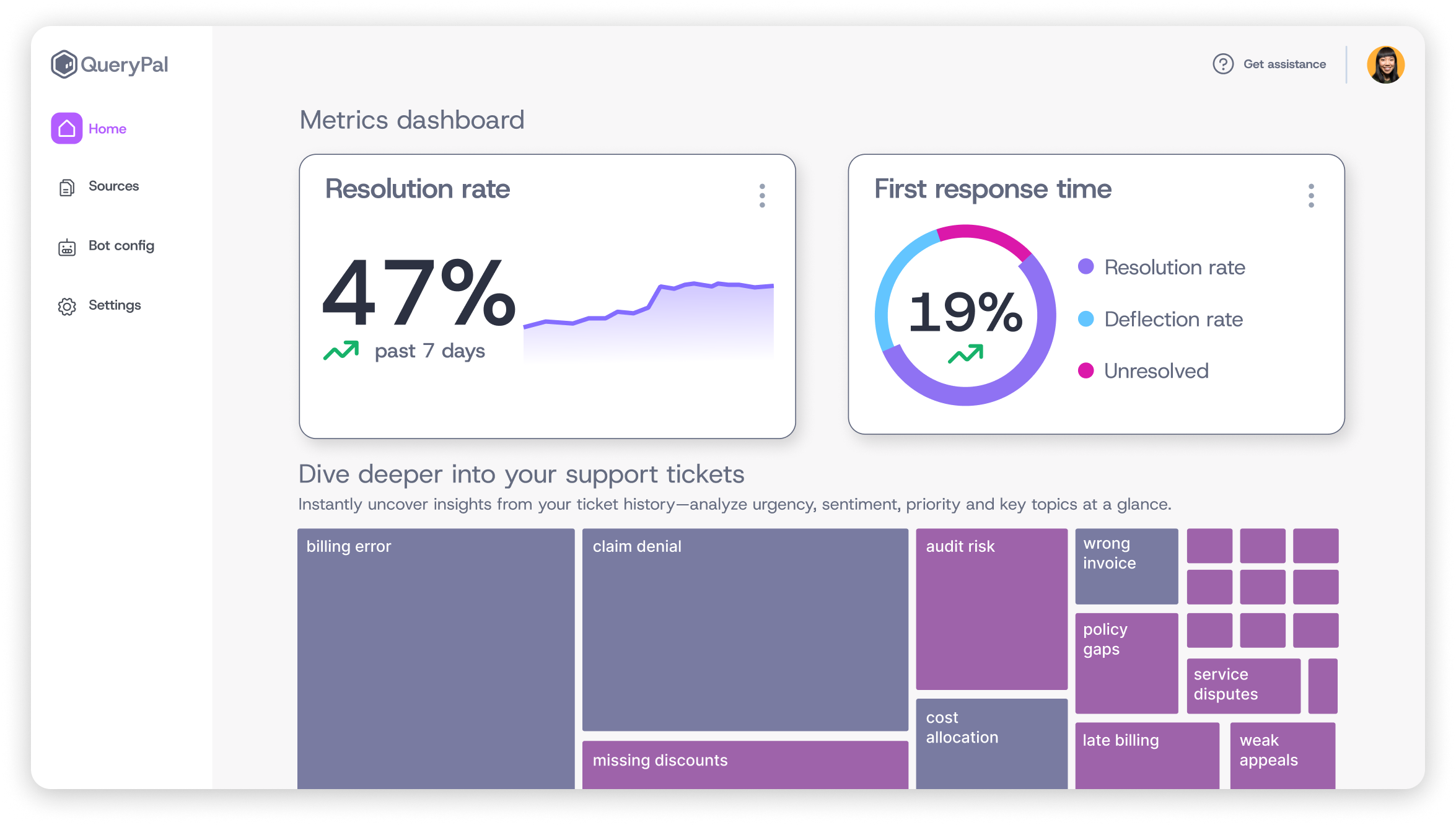
QueryPal's Prism module helps analyze support data to understand these patterns better.
AI-driven routing identifies intent to send customers to the best operator. Instead of pressing "1," the system recognizes an open billing ticket and routes to the billing team automatically.
This removes friction and starts resolution faster. It is about prevention, not deflection.
Increase the Adoption of Self-Service Systems to Reduce the Call Volume
The cheapest call is the one that never reaches the representative. Self-service is the biggest driver of expense reduction after optimizing labor.
When users find answers themselves, they are happier because they do not wait on hold. This creates an anticipatory experience where needs are met instantly.
Good self-service improves the experience by providing fast answers. It shrinks operational costs because representatives are free to handle complicated issues requiring empathy.
That split is easier to plan when you know how chat and voice customer service compare on cost per contact, concurrency, and the type of issue each channel resolves best.
We encourage treating product knowledge as a way to turn products into partners for the user.
What Are the Best Self-Service Options?
To reduce reliance on live agents, we must provide tools that are consistently easy to use and accurate for everyone.
- IVR menus for top issues: Keep phone menus short and focused on the top reasons people call.
- Online knowledge base: Create a searchable library of articles addressing common problems and guides.
- Help center with search: Ensure the search bar works well and leads to direct answers.
- Intelligence layer for simple questions: Utilize an interface to answer status checks without human help.
Each channel must be clear. If a user tries self-service and gets wrong information, they will call anyway, and they will be frustrated.
Reduce Call Volume With Intent Mapping
To stop calls, we need to know why people call. This requires analyzing call summaries and ticket tags. Common drivers include billing questions, password resets, and order status checks.
We can divide these into "automatable" and "agent-only" issues. Automating top-volume categories leads to immediate call center cost reduction.
QueryPal's Concierge module handles complex cases autonomously, acting as self-driving software. This keeps simple tasks away from expensive human talent.
Improve the Major Points That Directly Impact Call Center Costs the Most
Certain key performance indicators (KPIs) have an outsized influence on costs. Recent customer service statistics reinforce which metrics matter most for controlling spend.
Tracking the right numbers helps us see where money leaks from the operation. Improving these metrics reduces waste and repeat work.
We look at metrics as indicators of financial health. If representatives are slow or users call back, costs go up. This section focuses on tactical changes bringing the highest return.
Focus on First Call Resolution (FCR)
First Call Resolution (FCR) is the number one cause of higher prices. If we resolve the issue on the first try, there is no second call. Fewer repeat calls mean lower volume and lower costs.
We improve FCR by giving representatives better tools. When the representative has access to a unified knowledge base, like QueryPal integrating with Notion, they find answers faster. Clearer scripts also help.
Reduce Average Handle Time (AHT)
Average Handle Time (AHT) reductions should come from process improvements, not rushing representatives. Rushing lowers quality and hurts FCR. We want intuitive action, not haste.
Reduce AHT by providing pre-call data so the representative knows the history. Better tool usability also helps; representatives shouldn't toggle between tabs. Automated logging saves seconds after the call.
Improve Two Things: Occupancy & Agent Utilization
Occupancy is the percentage of time agents handle calls versus sitting idle. If low, we pay for nothing. If high, the frontliners burn out.
Optimizing schedules based on forecasts improves efficiency. We must also manage shrinkage, time paid for breaks, and training. Consistent adherence ensures we get value out of the labor budget.
Implementing proven call center productivity strategies helps maximize agent utilization while maintaining quality standards.
Use a Cloud-Based System to Reduce Your Costs For Tech & Infrastructure
Legacy systems are expensive to maintain. Cloud migration is the modern way to reduce physical infrastructure costs. Cloud-based centers scale without buying expensive hardware.
We prefer cloud systems for friction-free deployment. There are no servers to cool, and IT teams spend less time fixing wires. This shifts costs to predictable operational expenses.
Benefits of Cloud Migration
Moving to the cloud offers several unique financial advantages that impact the bottom line and create operational flexibility for the department.
- No hardware maintenance: Eliminate the need for expensive servers and technicians to fix them.
- Pay-only-for-usage pricing: Most providers charge based on users or minutes, offering flexibility.
- Faster remote onboarding: New staff can log in from anywhere with an internet connection.
- Easier feature upgrades: Get the latest tools without on-site IT work or downtime.
Lower People-Related Costs With Simple Solutions: Training, QA, and Coaching
People costs are the largest budget category, but offer the biggest savings opportunity. Strong training and Quality Assurance (QA) reduce costly mistakes leading to refunds.
We believe in a supportive approach. When the frontline feels confident, they work better. Investing in skills prevents the expensive "churn and burn" cycle. A well-trained frontliner handles calls faster, saving money.
Reduce Cost Through Better Coaching
Coaching should always be based on concrete data. We suggest using targeted QA insights to find specific areas for improvement.
- Use agent scorecards: Showing frontliners their metrics helps them self-correct.
- Target friction points: Coach specifically around billing errors or steps that confuse users.
- Review successful calls: Show examples of what "good" looks like to replicate success.
Improving accuracy reduces rework. If the frontline knows how to process a refund, they do it once. Guessing creates a mess to fix later.
Improve Your Agent Retention
Turnover is extremely expensive. When an agent quits, we lose hiring and training money. Then, we pay for recruiting a replacement. We also suffer from lost productivity.
Improve retention by offering development paths and recognition. Supportive leadership makes a difference. When staffing is consistent, the expense per call drops because experienced agents are efficient.
Consider How Remote Work or Outsourcing Impacts Your Long-Term Savings
Real estate is a massive budget item. Remote and outsourced models reduce overhead. By moving frontliners out of a central office, we save on rent and utilities.
We must weigh the pros and cons. While saving money is the goal, we cannot sacrifice quality. Choose the model that fits operational needs.
When Do Remote Teams Make Sense?
Remote teams allow us to hire the best talent available regardless of their specific physical location or local time zone.
- Lower overhead: Drastically reduce costs associated with physical office space.
- Larger hiring pool: Access candidates in cities with lower costs of living.
- Flexible staffing: Remote frontliners are often more willing to work split shifts.
Remote work requires strong systems. We need software to monitor performance. QueryPal supports this with SOC 2 compliance, ensuring data is safe with distributed teams.
Outsourcing: When Is It Cost-Effective?
Outsourcing parts of the operation can be a strategic move for effective expense management if managed with careful and constant oversight.
- 24/7 coverage: Offshore teams can cover night shifts at a lower rate.
- Overflow management: Use a partner to handle spikes without hiring permanent staff.
- Multilingual support: Access native speakers without expensive recruitment.
We advise evaluating Service Level Agreements (SLAs) before outsourcing. Consider that the cheapest vendor probably has hidden costs in poor experiences.
Get Your Call Center Costs Under Control
Reducing costs is not about slashing the budget blindly. It is about better routing, smarter self-service, improved metrics, cloud technology, and refining people operations. Sustainable reduction comes from efficiency.
We encourage you to choose strategies based on your needs. Whether you implement an intelligence layer like QueryPal or reorganize staffing, every change contributes to a healthier bottom line.
Start with data, look for waste, and build a system supporting your agents.
Visit QueryPal to see how we can help reduce call centre costs while improving customer satisfaction.
References
Frei, Frances X., Ann Evenson, and Patrick T. Harker. "Effective Call Center Management: Evidence from Financial Services." Harvard Business School Working Knowledge, 11 Jan. 2000, hbswk.hbs.edu/item/calling-all-managers-how-to-build-a-better-call-center.
Gans, Noah, Ger Koole, and Avishai Mandelbaum. "Telephone Call Centers: Tutorial, Review, and Research Prospects." Manufacturing & Service Operations Management, vol. 5, no. 2, Spring 2003, pp. 79-141, faculty.wharton.upenn.edu/wp-content/uploads/2012/04/Gans-Koole-Mandelbaum-CCReview.pdf.

Activate your free
6 week trial
& white-glove integration support.
Cut support costs by 60%, slash response & resolution times, improve your customer experiences, & reduce agent burnout. Find some time with us to show you how.