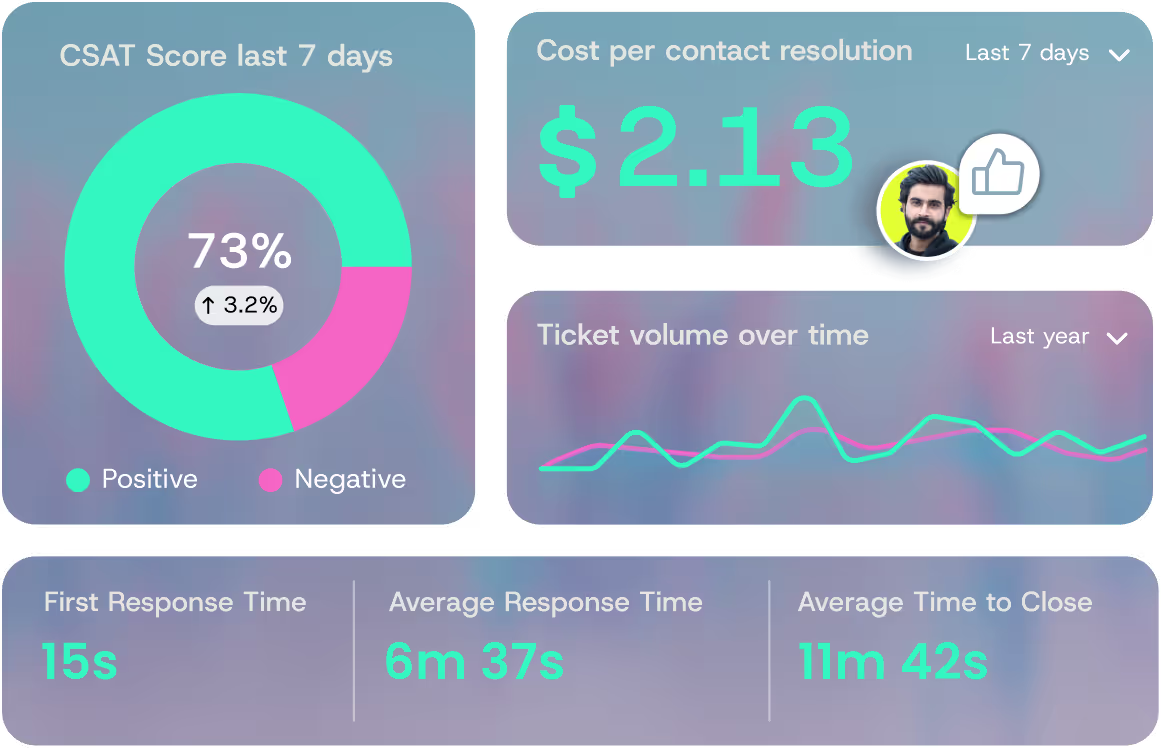
10 Easy Strategies to Reduce Customer Costs Quickly and Effectively
Running a business means making financial choices every day. Some choices feel obvious, like picking what to offer. Others hide in quiet corners until they shave off your margin.
Buyer expenses often sit in that shadowed area. Small charges build up fast. Most waste comes from slow workflows, unclear steps, and repetitive tasks.
When you clean up those weak spots, spending falls. Improvements stack up, and results show sooner than expected.
What Do Customer Costs Include (Acquisition, Service, Support, Retention)?
Buyer expenses usually fall into four main groups:
- Acquisition: Money used to reach new prospects. This includes ads, creative work, list building, and platforms that attract audiences. Many teams misjudge this area because hidden pieces outweigh visible ones.
- Service: Work required to deliver what someone paid for. Physical materials, packaging, onboarding steps, and internal labor fall here. It often stays unnoticed until something slows operations.
- Support: Effort spent assisting individuals when they run into issues. This includes troubleshooting, resolving login problems, and addressing account issues. It becomes costly when the same issues appear repeatedly.
- Retention: Work that keeps buyers connected. Loyalty perks, check-ins, product education, and success programs live here. These usually cost less than attracting new users.
Once these groups feel clear, it is easier to see where pressure builds.
Strategy 1 - Analyze and Gauge Your Current Customer Costs
You cannot control what involves no measurement. Many organizations rely on rough estimates or outdated sheets. Accurate tracking reveals patterns that were easy to miss.
Gather the core figures. That includes COGS, outreach spending, labor hours, returns, and money tied to engagement. Pull data from at least a year. It smooths out seasonal bumps and shows real trends.
Compare your numbers with groups similar in size. This gives context. A figure that looked acceptable might seem inflated once you see what others spend. That is your hint that something needs attention.
Here is a way to calculate base metrics:
- CAC = Total outreach spend / New signups.
- Cost to serve = Total service expenditure / Active accounts.
- Support load per account = Total assistance hours / Active accounts.
A quick example:
- If you spent $15,000 on outreach and gained 300 signups, your CAC is $50.
- If service spend was $9,000 with 600 active accounts, your cost to serve is $15.
These numbers make gaps easy to spot.
Calculate True CAC and Identify All the Hidden Expenses
Outreach totals hide noise. Start with visible expenses like ad spend, but also examine labor and content.
Sales overhead often slips through cracks. Follow-up messages, demos, and lead nurturing tasks matter. Creative production carries weight, too.
A video requires planning, filming, and editing. Freelancers may join in. All of this belongs in the calculation.
Software subscriptions add up. Funnel tracking, email systems, and lead capture apps contribute to outreach.
Then there is hidden labor. This includes creating proposals, organizing lists, and answering early inquiries.
If the task helps convert someone, it is part of the total. Many companies discover that outreach spending is double what they assumed.
Strategy 2 - Optimize Your Customer Acquisition Channels
Evaluate which paths bring value and which drain budgets. Performance changes over time. A channel that worked last year may not work now.
Some paths attract the wrong audience. Others produce browsers who rarely buy. A small shift in where you place money delivers better results without changing your strategy.
Use Retargeting and High-Converting Campaign Structures
Retargeting speaks to individuals who already showed interest. They convert faster and need less persuasion. If someone viewed items on your site, show them the same pair. Simple messaging works better than complex creative.
A clear landing page matters. If the page is confusing, strong ads fail. A clean flow saves money because it turns the same traffic into more sales.
Narrow Down Your Budget Allocation Based on Channel ROI
Some organizations spend on platforms that have stopped performing simply because of habit. Look closely at the results. If a path brings clicks but not buyers, reconsider it.
Shift budget toward platforms that deliver. Search ads, email lists, and referrals are reliable, but the answer lies in your data. You do not need to spend more. Just avoid spending where it no longer helps. Learning how AI ticketing systems streamline support operations can reveal where automation reduces acquisition friction.
Strategy 3 - Eliminate Redundant Customer Interactions and Support Inefficiencies
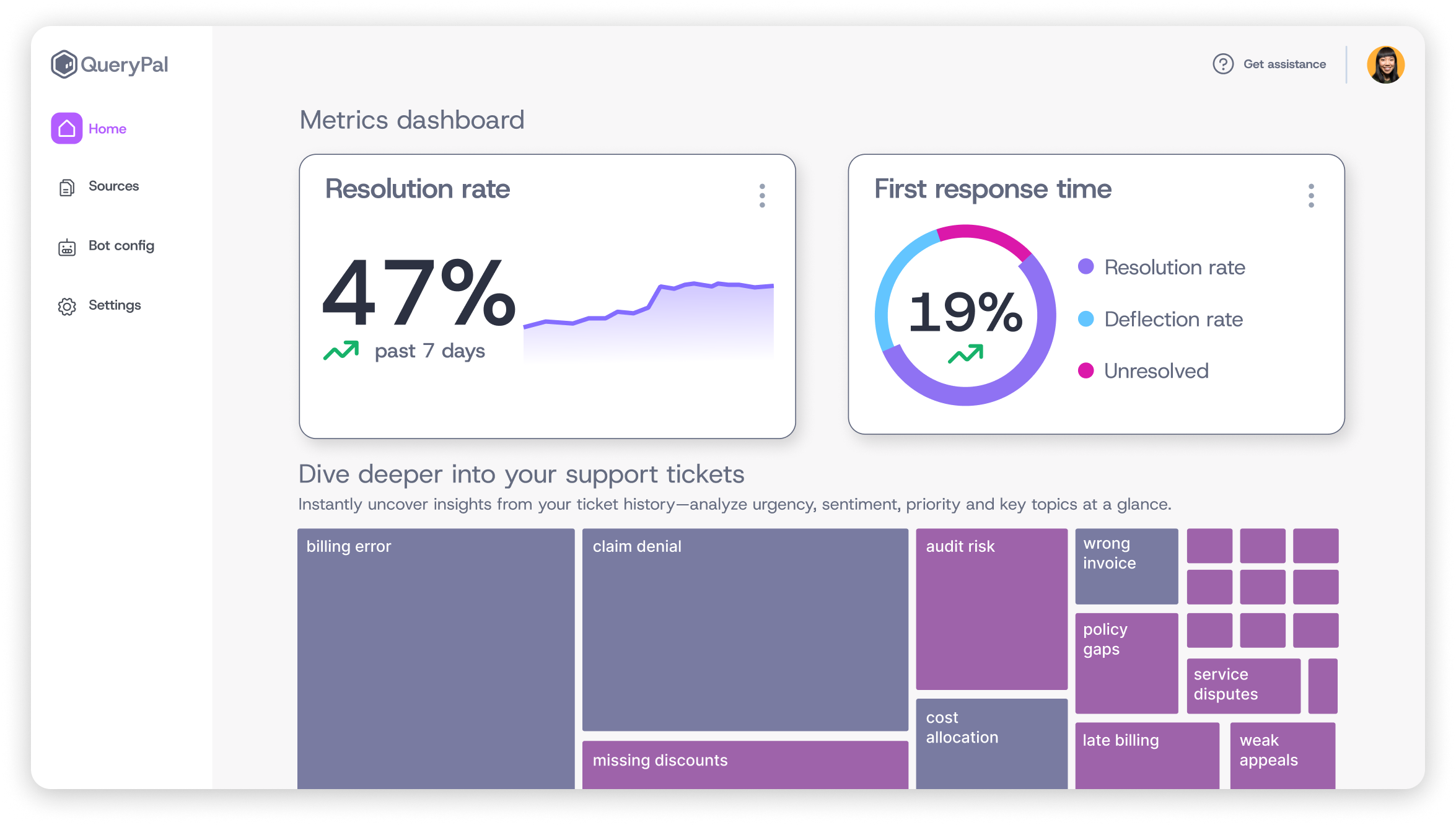
High request volumes reveal deeper problems. When the same question appears frequently, something earlier is unclear. Fix that root issue, and the workload drops.
QueryPal and similar tools surface patterns.
They show which inquiries appear often. Once you know the triggers, solve the problem where it begins.
Identify Some Root Causes of Repeat Contacts
Scan recent inquiries from the last few months. Group them into categories. Patterns appear quickly.
Questions about delivery status show up everywhere. If your tracking page confuses buyers, they reach out. A clearer view prevents many inquiries.
Login issues show up consistently. Password resets and verification steps slow individuals. Simplifying the process reduces friction.
Confusion about product features points to vague instructions. Rewrite the guide or provide a short clip. People appreciate clarity.
Billing misunderstandings usually come from unclear invoices. Clean documentation reduces friction.
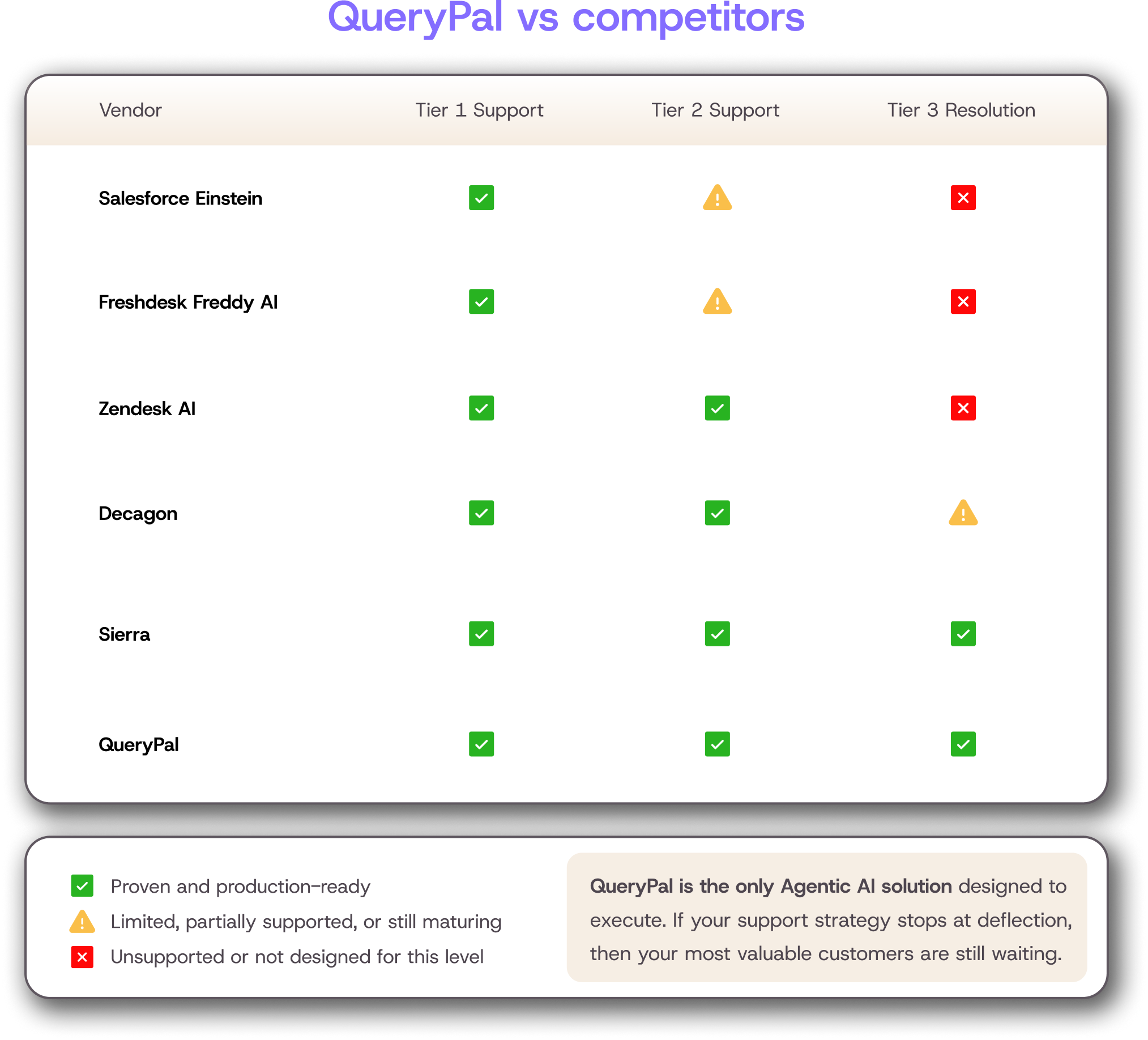
Solving these root problems lowers internal workload. Companies can see dramatic results when they address how enterprise companies save millions by fixing tier 3 support issues.
Strategy 4 - Optimize and Centralize Your Technology Stack
Too much software looks powerful at first. Each system promises a benefit. But every platform brings complexity and maintenance hours. When these stack up, your crew moves slower.
Reducing systems creates cleaner workflows. Budgets become easier to predict, and staff performance improves.
Consolidate Customer Service Platforms to Reduce Your Training and Tool Costs
When your team switches between dashboards, response time drops. Training takes longer because new hires must learn multiple systems. A unified platform fixes this.
With one platform, everything sits in one place. Email, chat, and history live together. Reporting gets simpler. License fees shrink. Onboarding becomes easier.
Put Smart Self-Driving Intuitive Action into Use for High Volume, Low Complexity Tasks
Self-Driving Intuitive Action shines when tasks repeat. Individuals want fast answers, and your team wants fewer manual steps.
Password resets and order updates can run automatically. Self-updating FAQ sections help visitors find solutions. Tools that provide assistance inside your digital product stop confusion before it becomes a ticket.
When self-driving intuitive action handles basic tasks, staff focus on complex cases requiring judgment. Exploring customer support automation best practices helps teams identify which processes benefit most from technology.
Strategy 5 - Reduce Your Labor and Operational Cost Responsibly
Labor consumes a large share of budgets. Cutting staff leads to weaker service, so the goal is efficiency. With clearer workflows, the same group produces better results.
Optimize Your Channel Mix and Guide Customers to the Most Cost-Effective Channels
Phone conversations are pricy because one person handles one call. Live chat allows one agent to assist several individuals. Email costs less. Self-service is even cheaper. Shifting volume toward these lower-cost channels can also improve customer response time, since chat and self-service deliver answers faster than phone queues.
Before you move a queue over, weigh the tradeoffs in chat vs. voice customer service, because voice still earns its higher cost on emotional, high-stakes, or ambiguous issues.
Guide individuals to lower expense paths. Provide strong help articles and prompts. Most users prefer quick answers, so they move naturally in that direction.
Reduce Outsourcing Dependencies Through Internal Efficiency Improvements
External partners are helpful but carry a high price. If your internal unit becomes efficient, dependence on outside support fades.
Create strong documentation. Build consistent workflows. Use a single knowledge base. When everyone uses reliable information, your internal team becomes faster. Over time, you may only need external partners for peak seasons.
Strategy 6 - Improve Your Retention and Customer Lifetime Value (LTV)
Keeping current clients is the best way to lower customer acquisition costs. Bringing in new individuals takes more effort and money.
Current customer experience statistics show that retained customers spend significantly more per transaction than first-time buyers. When someone stays for years, the return grows. Each renewal spreads the workload across a longer period.
Loyal clients need fewer touchpoints. They understand the product and make smoother decisions. Some even attract new buyers, which makes more income.
Retention work gives the strongest return over time.
Focus on High-Value Customer Segments and Personalization
Not everyone interacts with your product the same way. Some rely on it daily or place larger orders. These individuals are worth prioritizing.
You can do this by:
- Identifying the strongest segments based on spend or usage.
- Offering faster service lanes for active groups.
- Sharing early previews of improvements.
- Sending tailored messages matching habits.
- Scheduling check-ins with major accounts.
Small gestures matter. Clients who feel seen stay longer.
Launch Proactive Customer Success Initiatives
Warning signs appear before someone leaves. A client stops logging in or stops using a key feature. These clues are signals.
A proactive program might include:
- Health scoring that flags slipping accounts.
- Messages reminding individuals of unused features.
- Step-by-step onboarding for new signups.
- Milestone touchpoints during the first month.
- Quick emails when usage drops.
Step in early to keep clients engaged. It protects revenue without heavy outreach. Understanding what customer service transformation looks like gives teams a roadmap for retention improvements.
Strategy 7 - Turn Your Support Center Into a Revenue Generation Machine
Most see the help desk as an expense. But it brings revenue when handled with care. Anyone reaching out is engaged. They trust you to ask for guidance. That creates a chance to guide them toward something better.
Trained staff turn conversations into wins. Not through pressure, but through helpful suggestions.
Enable Upselling and Cross-Selling During Service Interactions
Your group needs awareness and gentle prompts. When someone explains a challenge, the answer might be a higher tier or an accessory.
Helpful elements include:
- Cues on the agent screen highlighting options.
- Training sessions on recognizing buying signals.
- Phrasing like "Some clients in your situation use…".
- One-click links to act immediately.
These touches support more revenue without changing the conversation tone.
Reduce Returns and Cart Abandonment Through Better Support
Returns cut margins. Abandoned carts hurt, too. Real-time guidance prevents both.
A few tactics:
- Show fit tips when someone hesitates
- Trigger a message when they close the tab
- Give staff scripts for setup problems
- Use friendly policy language at checkout.
When shoppers get clarity, more complete the purchase. Companies exploring AI use cases in SaaS and tech often discover new ways to decrease customer acquisition costs through smarter engagement.
Strategy 8 - Implement a Routine of Continuous Testing and Optimization to Keep Up Cost Reductions
Costs fall when you refine processes over time. Markets shift. Old workflows slow things down. Testing helps catch problems early without dramatic overhauls.
Continually making things better keeps your programs running at their optimum, which keeps costs at bay, so you aren't paying for a system to come back after failure. Just getting better.
Small adjustments add up. A smoother page or clearer message reduces questions and lowers labor effort.
A/B Test Critical Customer Touchpoints and Scale Winning Tactics
Start with areas that shape the first impression. Good places to test include:
- Landing pages.
- Onboarding flows.
- Checkout steps.
- Help desk scripts.
- Key buttons.
Try one tweak at a time. When a version performs better, use it everywhere.
Monitor Performance and Optimize Based on Real-Time Data
Keep improvements going with a rhythm of tracking.
Useful dashboards might include:
- Weekly views of response times.
- Monthly spending per inquiry.
- Reviews of survey comments.
- Checks on agent accuracy.
This loop keeps operations sharp. These habits lower expenses while making the experience smoother.
Teams can further reduce customer acquisition costs by implementing insights from AI in customer service guides.
Strategy 9 - Build a User Community to Offload Support Volume
One effective way to achieve customer service cost reduction is letting users assist one another. A dedicated community space creates a library of answers that lives outside your help desk.
When a user has a question, they often search first. If they find a thread where another individual solved the same issue, they never open a ticket.
This user self-help support saves internal hours immediately.
Encourage Peer-to-Peer Problem Solving
Building a community does not require complex software. It requires structure. Set up simple categories where members discuss features, bugs, or best practices.
Identify your "power users", the ones who know your product deeply. Give them recognition, badges, or small perks for answering questions. Their enthusiasm becomes your free support tier.
Create a Self-Sustaining Knowledge Hub
Over time, these discussions become a searchable database. Unlike a static FAQ page that you must update manually, a community updates itself daily.
New problems get flagged and solved by the group before your staff even begins the day.
Monitor the space to ensure accuracy, but let the community do the heavy lifting. This builds loyalty while lowering queue volume.
Organizations implementing AI use cases in healthcare and financial services find similar community-driven approaches reduce strain on support teams.
Strategy 10 - Use Feedback Loops to Fix Product Flaws Upstream
Support teams often spend their days solving repeated issues caused by deeper flaws. The most cost-effective move is not to answer faster, but to fix the root problem.
Connecting assistance data directly to your product team eliminates costs at the source. If a specific feature triggers many tickets, redesigning that feature is cheaper than handling those inquiries forever.
Categorize Support Tickets for Product Insights
Don't just close tickets; tag them. Use tags like "UX Confusion," "Bug," or "Feature Gap." Review these tags monthly with your engineers or designers.
If you see a spike in "Login Errors," investigate the code. If "Shipping Info" is the top tag, rewrite the checkout confirmation email.
Prioritize Fixes Based on Their Cost Impact
Assign a dollar value to these errors. If handling password reset tickets costs thousands each month, that issue deserves priority.
By treating ticket patterns as product insights rather than only complaints, you remove friction permanently. This lowers operational overhead and improves the experience for all users.
Reinforcing the Balance Between Savings and Experience
Lowering expenses is not about cutting value. It is about clarity.
When you understand where money goes, you direct energy wisely. Some improvements show quick wins. Others take time.
A phased approach helps keep things manageable:
- First 30 days: Measure core numbers, pinpoint one high-volume concern, and clean up the process.
- Next 60 days: Shift outreach budget to high-performing paths and introduce self-driving, intuitive action.
- Final 90 days: Run tests on touchpoints and launch retention outreach to strong segments.
Pick one step. Measure. Adjust. Watch the effect. These choices build a cleaner operation.
If you want help reducing repetitive inquiries or improving efficiency, you can book a quick walkthrough with QueryPal.
References
Harvard Business Review. "Customer Acquisition vs. Retention Costs." Harvard Business Review, Harvard Business Publishing, https://hbr.org. Accessed 10 Dec. 2025.
MIT Sloan Management Review. "Operational Efficiency and Cost Reduction Strategies." MIT Sloan Management Review, Massachusetts Institute of Technology, https://sloanreview.mit.edu. Accessed 10 Dec. 2025.

Activate your free
6 week trial
& white-glove integration support.
Cut support costs by 60%, slash response & resolution times, improve your customer experiences, & reduce agent burnout. Find some time with us to show you how.