AI Use Cases in SaaS & Tech: Examples & Applications
Artificial intelligence is now a core part of modern software. As of 2025, AI adoption and SaaS consolidation have transformed how businesses operate—it is no longer just an extra feature but a fundamental layer that makes digital assistants smarter and more helpful.
This article breaks down the most important AI use cases in the SaaS and tech industries, along with practical examples and the real impacts these tools deliver.
You will see how these technologies handle complex tasks on their own and improve user interactions. Using AI to improve user experience is a common starting point for many companies.
This is an area where our work at QueryPal is focused. Please read on to learn how these technologies are changing how we operate every day.
What Does AI in SaaS Actually Mean?
AI in SaaS means putting self-learning solutions into cloud software. This is more than simple automation.
It creates a digital assistant that gets better at its job over time. These artificial intelligence SaaS solutions make digital assistants more helpful, improve how they work, and make personnel happier.
They use information to predict what might happen next and can understand human language. They can also take action on their own from inside the app.
This changes the digital assistant from a static tool into a dynamic partner. The digital assistant learns from how people use it and improves itself without constant help from engineers.
Why AI Matters for SaaS and Tech Companies
Using AI offers clear benefits that help a business grow and stay strong. It helps companies save money on daily tasks, build new products faster, and create experiences that feel personal to each individual.
The good effects are felt across the entire company, leading to smarter and more flexible operations. One major plus is that it helps leaders make faster, better decisions.
AI can look at huge amounts of live information and pull out the most important insights. This lets managers act quickly based on facts, not just guesses. The main benefits show up in a few important ways:
- Leaders can use real-time details to guide their companies with more confidence.
- Complicated, multi-step tasks run by themselves, cutting down on errors and saving time.
- Computer frameworks adjust automatically to handle busy periods, avoiding crashes and slow performance.
- Companies can find and help consumers who are having trouble, often before they even complain.
Another big advantage is how AI handles complex tasks. It can manage difficult jobs like guiding new patrons or processing payments.
This important work gives employees their time back. They can then focus on bigger projects that need human thought and creativity.
What Are the Top AI Use Cases in SaaS & Tech?
1. Intuitive Action, and Self-Driving Customer Experience
AI changes customer experience from simple answers to real solutions. These solutions understand what clients need and can take action to help.
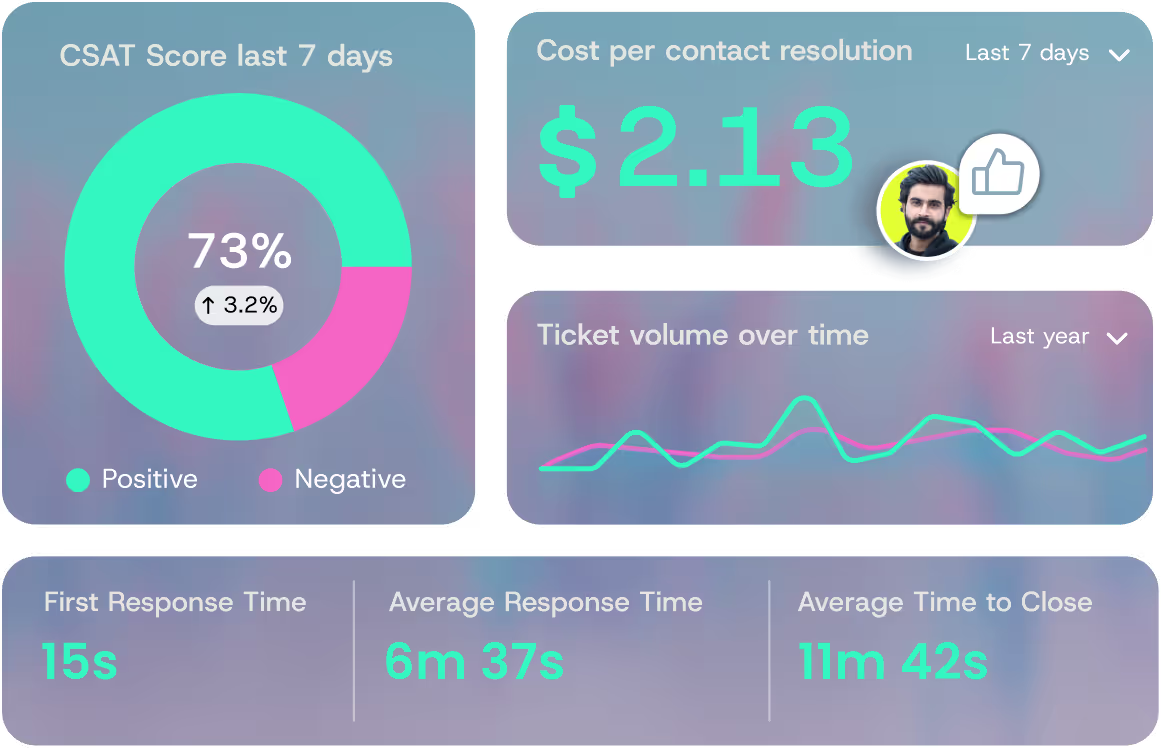
At QueryPal, we see this handle many questions while working with other tools to solve problems faster.
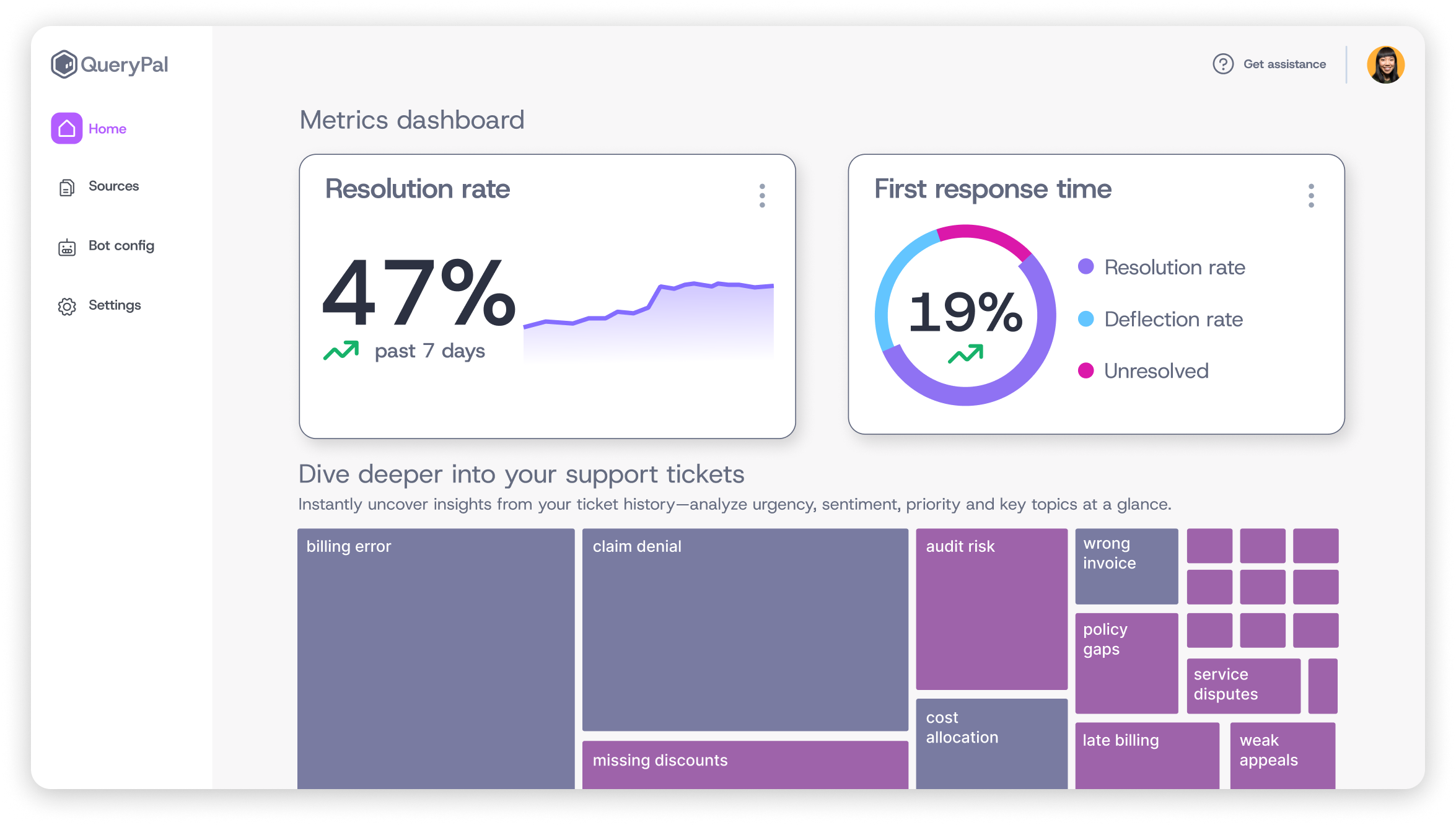
This leads to lower costs and happier clients.
This works through several key features:
- Virtual assistants answer questions using company guides
- Smart systems send hard problems to the right person
- Automatic built-in helpers shorten long conversations into quick summaries
2. Predictive Analytics and Forecasting- What’s Next?
Predictive analytics helps businesses guess what will happen next by looking at patterns. These frameworks watch how clients use products and what they pay for to predict future trends.
This helps companies plan better and know where to put their resources.
This helps in three main ways:
- Finding clients who might stop using the service
- Predicting when the technology will need more power, which is a core component of software scalability planning
- Guessing future sales by looking at current client interest
3. Intelligent Personalization
Smart solutions can now create custom experiences for every patron. They adjust what people see and how they interact with digital modules based on individual needs and past behavior.
This approach goes far beyond showing basic suggestions. The technology can actually modify the interface itself, making supporting features feel like they were designed for each person specifically.
These adaptive applications work in several practical ways. Interfaces might highlight different functions depending on a user's job role and previous actions.
New patrons often receive guided onboarding that focuses on the most relevant features for their situation. What people see and even what they pay can shift in real-time based on how they use the product and which segment they belong to.
4. AI for Sales and Marketing Optimization
Sales and marketing teams increasingly rely on smart tech to improve their outreach. These automated processes help identify the most promising leads and determine the ideal timing and message for contacting them.
This method ensures sales activities match actual buyer interest, which typically increases conversion rates and improves marketing efficiency.
The practical implementations are quite straightforward. Lead scoring systems automatically rank prospects based on their purchase likelihood.
Pricing engines can adjust offers according to current market conditions and individual buyer profiles.
Content generation tools help create tailored messages for different audience groups without requiring manual writing for each segment.
5. Fraud Detection and Security Automation
Keeping user details safe is a main concern for online platforms. Constantly watching for unusual activity helps make these tools safer.
These automated processes check login patterns, payment actions, and how people use products to spot possible threats. They can often find problems before serious damage occurs.
It looks for warning signs like someone trying to access an account from a strange location. They also watch money transactions for signs of theft or fake purchases.
Automated checking makes sure data handling follows privacy rules without needing people to do all the work manually.
6. AI in Product Development and UX Testing
AI is changing how companies create and test software.
They can automatically find trouble spots, guess where errors might happen, and learn from user comments. This helps product teams make better choices about designs and new features while working faster.
These technologies predict where bugs might appear by watching code changes and how people use the product. They can see which parts of an interface confuse patrons or get ignored.
It also reads through feedback from surveys and support requests, helping teams decide what to fix first.
7. AI-Powered Documentation and Knowledge Management
Keeping company information neat and easy to find is a constant problem. AI automatically organizes and shortens content. This lets workers and buyers find answers fast without searching through lots of documents.
These applications work in simple ways that help everyone. It does this in three main ways that save time and trouble.
The technology creates short summaries from long reports, adds useful labels to help articles, and answers normal questions directly. These features work together to help people find what they need:
- Making short guides from long manuals
- Adding smart tags to help articles
- Understanding everyday questions to find the correct answers
Potential Challenges to Overcome When Putting AI into Play
Adding smart tools to current frameworks can cause some problems. Good planning helps handle details, fairness, and technical issues from the beginning.
Moving step by step makes sure the final program works well and can be trusted.
Teams often have trouble managing their information. Handling records from different places needs clear rules and steady habits.
The fix includes making simple data rules that keep client details safe.
Making fair programs is another worry. Using different information sources and testing results often helps stop unfair outcomes.
These are the most common problems teams face and how to solve them:
- Messy records - Make clear rules for handling information safely
- Old frameworks - Start with small projects that connect to existing tools
- Keeping things working - Plan regular updates and checkups
- Following rules - Pick tools with built-in privacy and security
Teams also struggle when connecting new technology with old tools. Instead of trying to change everything at once, begin with small projects that use simple connections.
Keeping systems working well needs regular attention, just like other important software. Setting up routine updates and checks from the start keeps everything running properly.
Following government rules is required, so working with companies that include compliance features provides needed protection.
Tips For the Best Ways to Adopt AI in SaaS
A thoughtful plan for bringing in new technology makes success more likely and reduces disruption. Focusing on clear goals and measurable results helps build a strong base for using AI more widely.
Start with one single, clearly defined project. A few key practices can guide you as you begin.
- Start Small and Specific: Pick one problem area with a clear success metric, like improving first-contact resolution rates.
- Check Your Readiness: Evaluate your records, tech setup, and team skills before you begin.
- Measure Everything: Track specific numbers to prove the value and guide your next steps.
- Keep Humans in the Loop: Use people to supervise the automated processes, especially in the early stages, to catch mistakes.
- Partner for Speed: Using an established platform for your first project can help you see results faster. Book a demo with QueryPal to explore how AI can transform your workflows.
What’s the Future Look Like For AI in SaaS and Tech?
Here are the key developments shaping the next wave of innovation in SaaS:
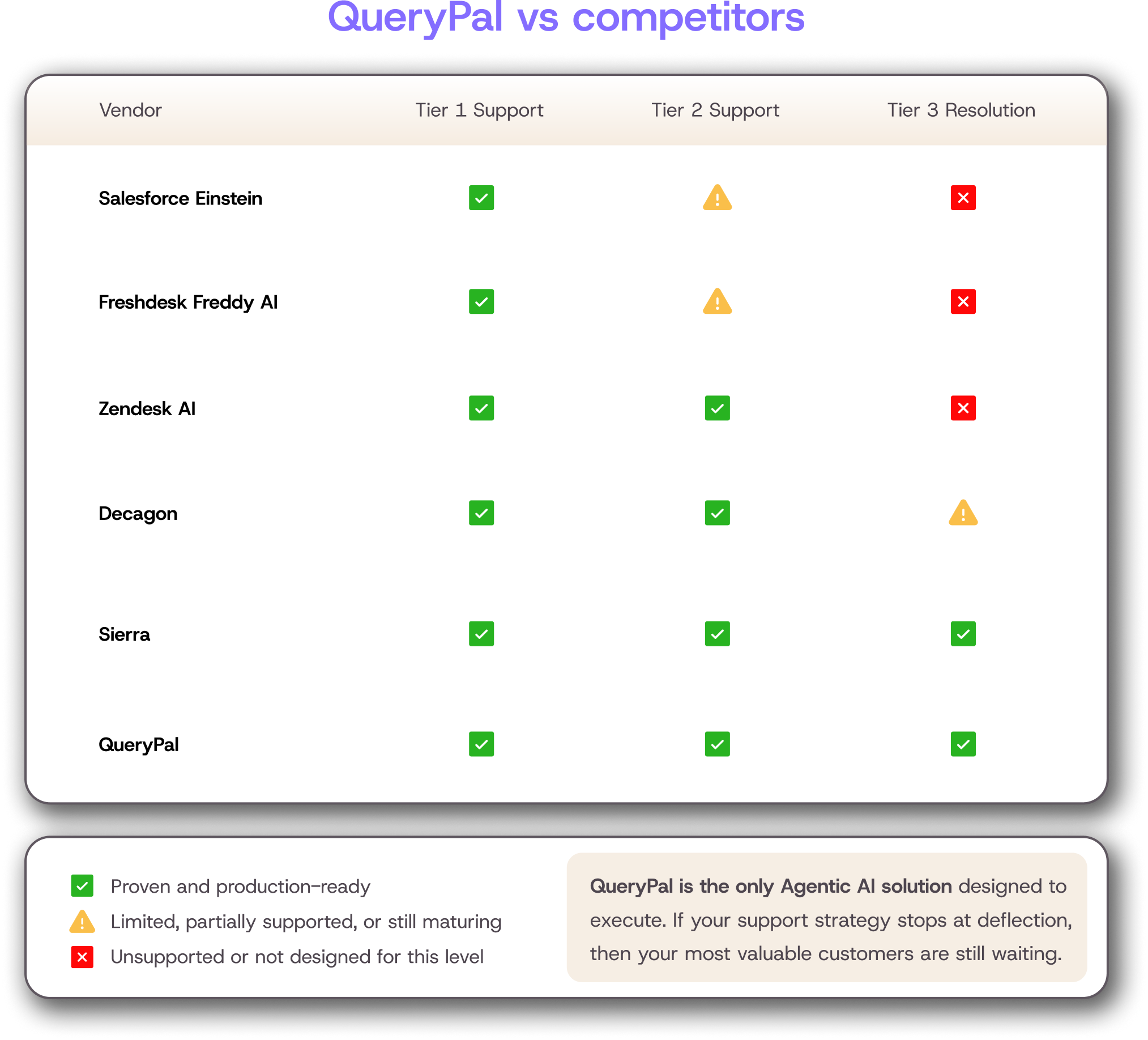
- We will see a major rise in agentic AI, where systems can execute multi-step, self-directed automation to complete complex tasks from start to finish without constant human intervention.
- AI copilots will become a standard, embedded component within every major workflow, acting as an integrated partner that assists users directly within their daily applications. Understanding AI SaaS product classification criteria will become essential for businesses evaluating these solutions.
- Stronger governance frameworks and automated audits will emerge as critical necessities, ensuring these powerful systems operate responsibly and transparently.
- Interfaces will evolve toward voice-based controls, and we will see the adoption of real-time, adaptive pricing models that respond instantly to market conditions.
This progression confirms that AI is becoming a fundamental, core layer of software itself, not just an optional add-on.
Platforms like QueryPal are at the forefront of this shift, building the foundation for truly autonomous, AI-driven operations.
How Can AI Ultimately Help Your Company?
Smart technology is changing what software can do. It solves real problems in customer service transformation and business operations.
Look at your own company's workflows-where do teams spend the most time answering the same questions? Where do simple tasks take too long? That's where intelligent systems can make a real difference.
Whether through intelligent chatbots or predictive analytics, AI is shaping the next generation of SaaS, and platforms like QueryPal are proving what’s possible.
References
Bass, L., Clements, P., & Kazman, R. "Software Architecture in Practice." Carnegie Mellon University Software Engineering Institute, 2012, https://www.sei.cmu.edu/.
ISO/IEC JTC 1/SC 42. "Artificial Intelligence Standards." International Organization for Standardization, 2025, https://www.iso.org/artificial-intelligence/what-is-ai.

Activate your free
6 week trial
& white-glove integration support.
Cut support costs by 60%, slash response & resolution times, improve your customer experiences, & reduce agent burnout. Find some time with us to show you how.