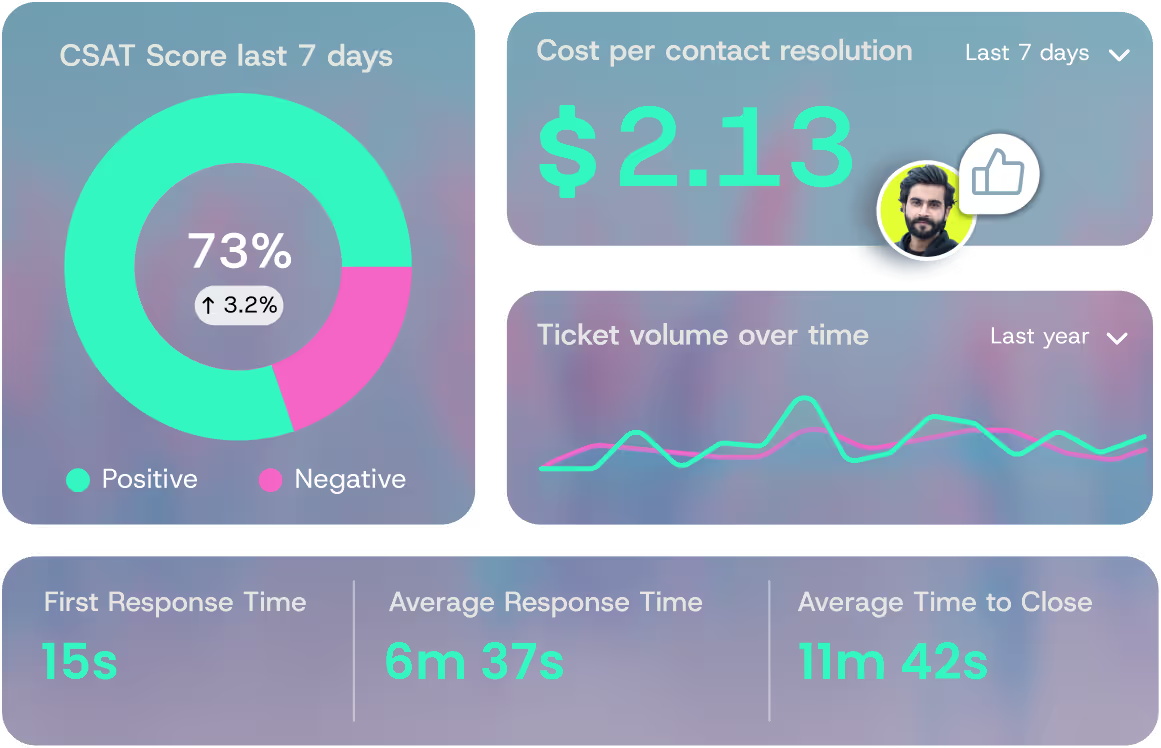
What is Call Center Productivity? Metrics, Importance, and Calculation Guide
Call center productivity is the measurement of how effectively team members resolve client issues using available time and resources without sacrificing service excellence. It is not simply about how fast a representative talks or the sheer number of inquiries answered in a single shift.
It is about striking a balance between speed, accuracy, and user happiness. To understand the formulas, stats, and strategies that drive real outcomes for your group, keep reading.
Why Call Center Productivity Matters More Than Ever
User expectations have shifted dramatically in recent years. People want answers immediately, and they expect the person on the other end of the line to know exactly how to help them.
They do not want to repeat their story or wait on hold while a representative searches for a file.
At the same time, managers face a difficult staffing reality. Finding and keeping skilled people is harder than ever.
This creates a tense environment where the unit must handle more volume with fewer resources.
This pressure makes efficiency in call center operations the most critical goal for survival.
If a department focuses only on speed, the standard of service falls apart. Callers get angry, dial back, and create even more demand.
If the focus is only on excellence without watching the clock, costs explode, and queues grow.
True success is the balance between these two sides. It ensures the business stays profitable while employees feel supported rather than burnt out.
Organizations investing in AI-powered customer service solutions discover sustainable ways to achieve this balance.
What Is Call Center Productivity?
This concept is a measurement of how effectively personnel use their schedule and tools to resolve issues. It is not simply about how many phones a rep answers in an hour.
A successful operator is the one who solves problems permanently so clients do not need to reach out again.
There is a big difference between efficiency and productivity call center leaders must understand. Efficiency is about doing tasks fast.
A staff member might rush through a conversation in two minutes, which looks efficient.
But if the consumer contacts you again because the error was not fixed, that individual was not effective.
Productivity in call center environments focuses on the outcome. It asks if we achieved the right result with the best use of effort.
Modern output involves more than just telephone skills. It includes how the workforce uses chat, email, and internal knowledge bases.
We must look at the whole picture of the employee's day, including the software they use and the environment they work in.
- There are several specific components that must come together to create a truly optimized environment for a modern support hub.
- Omni-channel availability: The group handles requests from phones, chats, and emails in one single view.
- Digital tools: Software helps users find answers instantly without searching through deep folders.
- Staff enablement: Squads have the authority to solve problems without asking for manager approval.
- Intuitive action: Technology handles simple tasks so humans can focus on complex duties. Customer support automation plays a crucial role in enabling teams to work smarter.
How do You Calculate Call Center Productivity?
You cannot improve what you do not measure. To understand how the operation is functioning, we need clear math. The most basic way to look at success is to compare the effort we put in against the fruits we get out. This gives us a baseline to track our progress.
The Core Productivity Formula (Output ÷ Input × 100)
To get a percentage, we need two figures.
First, we define "output." This is usually the count of resolved cases, handled tickets, or completed interactions.
Second, we define "input." This is typically the number of hours logged or the total cost of the shift.
Once we have these figures, the math is straightforward.
We divide the output by the input and multiply by 100 to get a productivity percentage.
Imagine a unit works a combined total of 100 hours in a day. During that period, they successfully resolved 800 tickets. To find the rate per hour, we divide 800 resolutions by 100 hours.
The result is 8 resolutions per hour. If our goal is 10, we know we are operating at 80% of our target. This simple calculation helps leaders see where they stand instantly.
Additional Calculation Models Used in Call Centers
Different departments prioritize different goals, so we often use a few specific models to track our daily success rates.
- Resolution-based model: This measures the percentage of inquiries solved on the very first contact.
- Time-based model: This compares active minutes (talking to users) versus total shift minutes.
- Volume-based model: This tracks the number of tasks completed relative to the total demand.
Essential Call Center Productivity Metrics
To really understand health, we need to look at specific data points. These call center efficiency metrics tell us the condition of our operation. Relying on just one number can be misleading. By tracking a few key areas, we get a complete view of how the workforce is functioning.
First Call Resolution (FCR)
First Contact Resolution is the strongest indicator of true success. It measures the percentage of interactions where the issue is fixed before the conversation ends. When FCR is high, it means the operation is effective.
The benefits are huge. High FCR means fewer repeat attempts, which lowers the overall workload. It also leads to higher satisfaction. People respect having their schedule saved.
When a rep solves a problem in one go, it saves money and keeps the operator free for the next individual.
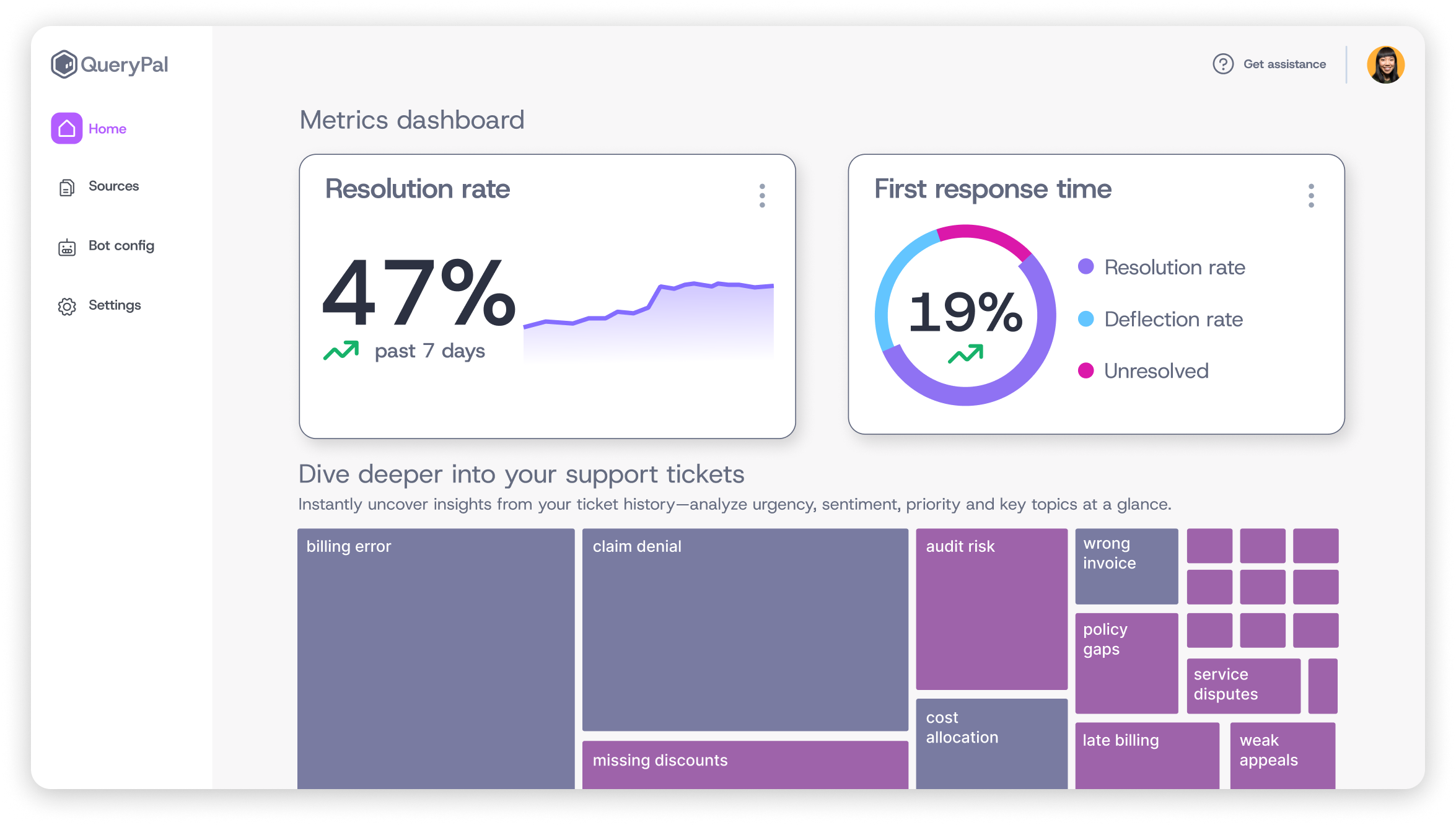
Modern AI ticketing systems help improve FCR by providing agents with instant access to relevant information.
Average Handle Time (AHT)
This metric measures the average length a staff member spends on a line. This includes speaking, holding, and the wrap-up duties after the connection ends.
Many leaders make the mistake of thinking shorter is always better. If a person rushes to lower their minutes, they might make mistakes. The goal is to balance pace with accuracy.
We want the team to be swift, but not at the cost of service. We look for an optimal duration that allows for thorough answers without waste.
Agent Utilization & Occupancy
These stats track how the workforce spends their shifts. Utilization measures the period an employee is present versus their paid hours. Occupancy measures the moments they spend handling inquiries versus waiting.
If occupancy is too high, the staff has no recovery pause between tasks. This leads to exhaustion.
If it is too low, we are paying for idle gaps. Finding the balance is key. High occupancy for long intervals harms long-term yield because tired people work slower.
Customer Satisfaction (CSAT) & Quality Scores
Output means nothing if clients are unhappy. CSAT scores tell us if our speed is costing us service caliber.
Quality ratings come from reviewing recordings to ensure personnel followed the right steps.
There is a direct link between excellence and results. If an individual skips steps to be fast, their rating drops.
This eventually causes errors that take longer to fix. Top-tier effort is the most effective effort because it is done right the first time.
Why is Call Center Productivity Important?
Improving contact center productivity creates a ripple effect that benefits the entire company, from the front-line members to the bottom line.
- Operational health: We lower handling expenses and make better use of our budget.
- Client experience: Consumers get faster help, fewer transfers, and smoother resolutions.
- Squad morale: Employees suffer less from overwork, feel more supported, and stay longer.
- Business strength: There is a direct positive impact on revenue and brand loyalty. Enterprise companies save millions by addressing productivity challenges strategically.
Common Causes of Low Call Center Productivity
When performance metrics decline, there is usually a specific reason. It is rarely because the staff is lazy.
Often, systemic obstacles prevent them from doing their best. Identifying these root causes is the first step to fixing them.
Research and industry data show several factors consistently slow down departments and make it difficult to reach monthly targets.
- Outdated systems: Legacy software creates delays that frustrate both representatives and users.
- Poor training: Personnel who lack adequate knowledge spend valuable minutes searching for answers or escalating unnecessarily.
- Ineffective scheduling: Understaffing during peak hours creates stress, long queues, and burnout.
- Employee burnout: When experienced team members leave due to exhaustion, the remaining group carries a heavier load.
- Limited visibility: Without proper analytics, managers cannot identify or address performance bottlenecks.
- Manual workflows: Repetitive manual tasks like note-taking and data entry waste significant time every hour.
How to Improve Call Center Productivity with Some Actionable Strategies
Improving yield is not about demanding people work harder. It is about giving them the right environment. We can use specific strategies to remove friction and make their jobs easier. Here's how to increase call center productivity effectively.
Optimize Training & Continuous Coaching
Education must continue after onboarding. Representatives need regular updates to stay sharp. Coaching on flow helps them navigate conversations efficiently.
Soft skills training helps them handle difficult situations quickly.
Peer mentoring is effective. New hires learn faster when sitting with experienced members. Micro-learning allows for short, focused lessons that do not take operators off the floor for long periods.
Use Workforce Optimization (WFO) & Better Forecasting
We must align staffing with volume patterns. If Mondays are busy, we need more hands then. Optimization tools help predict these peaks using history.
Proper forecasting reduces idle gaps and minimizes over-occupancy. When the workload is balanced, the team stays fresh. This prevents the exhaustion that leads to slow results later in the day.
Streamline Processes with Agentic User Interfaces & AI Tools
This is where modern technology changes the game. We can use an intelligence layer to support our operation. QueryPal focuses on "prevention, not deflection." Our goal is to assist the human, not just hide them from the user.
We use our agentic user interface to create an anticipatory experience. For example, our Concierge module can handle complex cases autonomously. This acts like self-driving software for tickets.
It allows human personnel to focus on interactions that require empathy. By letting the system handle data analysis and routine answers, we cut down the cognitive load on the group.
This leads to faster resolutions and happier employees.
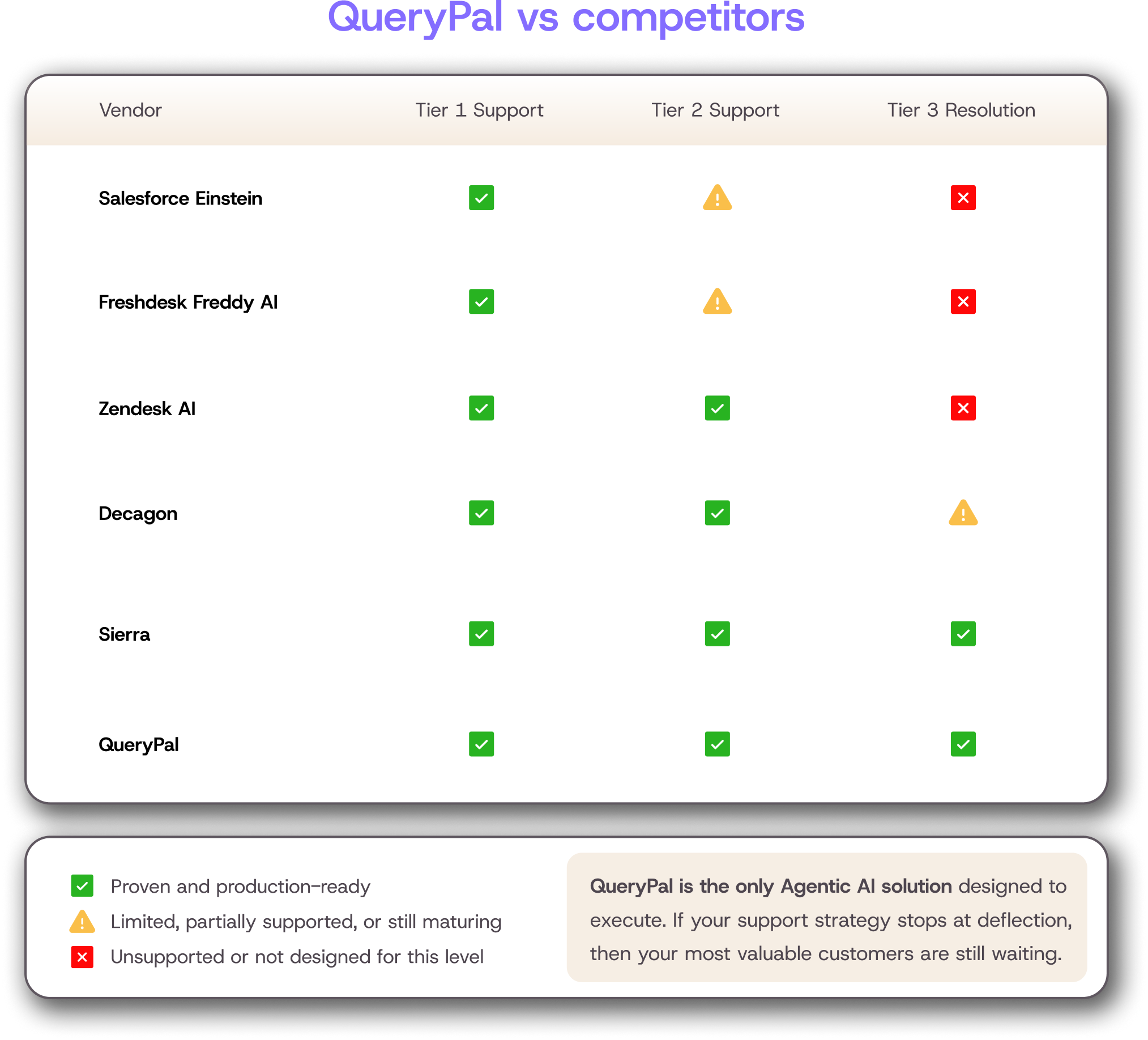
Organizations across financial services, healthcare, and SaaS tech sectors leverage these tools to transform their operations.
Strengthen Agent Tools & Reduce Friction
The workforce needs software that works as fast as they do. A slow CRM kills momentum. We must ensure telephony and ticketing platforms are reliable.
Unified desktops are a great solution. Instead of switching between tabs, the operator sees everything in one view. This reduces the "toggle tax" of moving between apps. When the platform is intuitive, the rep focuses entirely on the caller.
Monitoring & Sustaining Productivity the Best Way Possible
Once we improve our numbers, we must maintain them. This requires consistent attention. We cannot just set it and forget it. We must monitor the right things and treat people well.
- Industry best practices and successful call center operations follow these proven steps to keep execution high without causing stress for the support team.
- Choose the right KPIs: Select indicators that match your business goals, not just industry standards.
- Use quality assurance: Look at excellence scores alongside speed stats to get the full story.
- Maintain scorecard reviews: Show members their data regularly and discuss improvement opportunities.
- Encourage feedback: Listen to the staff when they identify broken processes.
- Balance goals: Ensure targets are realistic and achievable to avoid high turnover. Customer service transformation requires ongoing commitment to these principles.
Commit to Boosting Your Call Center's Success
Operational success is about outcomes, not just pace. It comes from a system where the workforce is empowered, platforms are fast, and goals are clear. When we focus on removing barriers, the numbers improve naturally.
Efficiency rises when systems are modern, and indicators align with quality. We see that an intelligence layer transforms operations by handling routine tasks.
This lets the human element shine where it is needed most.
Businesses that measure and refine their execution outperform competitors. They deliver better satisfaction, operate smoothly, and retain talent.
By taking steps to improve these areas, we build a support hub ready for the future. Discover how QueryPal can assist your team in this journey.
References
[1] Erlang, A. K. "The Theory of Probabilities and Telephone Conversations." Nyt Tidsskrift for Matematik, Copenhagen Technical University, 1909, www.jstor.org/stable/community.28374108.
[2] Kerckhoffs Institute. Call Center Productivity: Proven Tips and Strategies. kerckhoffs-institute.org, 2023.www.icmi.com/resources/call-center-management-fast-forward.

Activate your free
6 week trial
& white-glove integration support.
Cut support costs by 60%, slash response & resolution times, improve your customer experiences, & reduce agent burnout. Find some time with us to show you how.