What Is Call Center Burnout? And How Can You Prevent It?
Your best agents are burning out. You can see it in the rising absenteeism, the slip in quality scores, the resignation letters piling up, the interviews that lead nowhere.
Call center burnout isn't a new problem, but it's accelerating. And the usual fixes (pizza parties and wellness webinars) aren't making a dent. So what's driving it, how much is it costing you, and what does the research say about preventing it?
What Is Call Center Burnout?
Call center burnout, sometimes called contact center burnout, is a state of chronic physical, emotional, and mental exhaustion caused by prolonged exposure to the high-pressure, repetitive demands of contact center work.
The World Health Organization recognizes burnout as an occupational syndrome resulting from "chronic workplace stress that has not been successfully managed."
Researchers Christina Maslach and Michael Leiter, who published the most widely cited burnout framework in World Psychiatry, break the syndrome into three dimensions.
- Exhaustion: The depletion of emotional and physical energy
- Cynicism: Detachment and negativity toward the work and customers
- Inefficacy: The creeping sense that nothing you do matters
Here's what separates burnout from a rough week. Normal stress resolves with rest. Take a long weekend, sleep in, recharge, and you bounce back.
Burnout doesn't work that way. It's structural, built up over months of unchanging conditions and relentless pressure. Maslach and Leiter's research notes that recovery is difficult and prolonged, particularly when the underlying work environment doesn't change.
Call Center Burnout by the Numbers
The data paints a rough picture.
By some estimates, roughly three in four call center agents are at risk of burnout, with about 30% at severe risk.
Agent attrition tells the rest of the story. Call center annual turnover rates commonly run above 30%, more than double the national average. Most agents stick around 13 to 15 months before moving on.
Gallup found that burned-out employees are 63% more likely to take sick days and 2.6 times more likely to be actively looking for a new job. Only about one in four feel their employer genuinely cares about agent wellbeing.
What Causes Call Center Burnout?
Most conversations about burnout focus on the individual. The agent can't handle the pressure, so they need better coping strategies and more resilience training.
The research says otherwise. A 2021 study published in the International Journal of Environmental Research and Public Health, surveying 1,440 employees across 15 contact centers, found that burnout is driven primarily by organizational conditions rather than individual weakness.
That framework identifies six organizational risk factors, including workload, lack of control, insufficient reward, poor community, unfairness, and values mismatch.
In plain terms, the system is the problem.
Emotional Labor That Never Lets Up
Call center agents manage emotions, both their own and the customer's, for every single interaction, and that invisible labor is relentless.
A 2016 study in Frontiers in Psychology examined inbound call centers and identified emotional dissonance as the primary driver of agent strain. Emotional dissonance is the gap between what an agent actually feels and what they're required to express.
A customer screams at you for 20 minutes over a billing error. You feel frustrated, maybe angry. But you have to sound calm, empathetic, and helpful the entire time.
That gap grinds people down. Customer verbal aggression directly increases emotional dissonance, which in turn accelerates burnout.
Repetitive Work, Zero Autonomy
Script-based interactions give agents almost no room for independent decision-making. Password resets, account lookups, basic troubleshooting, the same handful of questions cycling through the queue all week long.
The same Frontiers research confirmed that front-office agents consistently report higher exhaustion and lower perceived autonomy than back-office staff. Constant electronic monitoring makes it worse.
When every second of your shift is tracked and measured, the psychological pressure never lets up.
Metrics That Measure Activity, Not Impact
Average handle time. Calls per hour. Schedule adherence tracked down to the minute. These key performance indicators (KPIs) measure output, not outcomes.
When agents feel evaluated on speed rather than quality, the pressure creates anxiety that feeds directly into burnout.
Many contact center managers report that high agent turnover and absenteeism are among the top challenges affecting first-call resolution (FCR) and customer satisfaction (CSAT) scores.
The very metrics designed to improve performance are contributing to the turnover that undermines it.
No Visible Career Path
When agents can't see a future beyond their current role, the incentive to push through the hard days disappears. The work quickly starts to feel like a dead end.
Agents who see real investment in their growth are far more likely to stay, making career development one of the strongest levers for agent retention.
For call centers with flat organizational structures, the absence of career progression quietly accelerates burnout.
Warning Signs Your Agents Are Burning Out
Call center burnout symptoms build slowly. By the time you notice, the damage is significant. Look for these signs early.
Physical signs hit first.
- Persistent fatigue that doesn't resolve with time off
- Frequent illness and headaches
- Disrupted sleep
Emotional shifts are harder to spot.
- Growing cynicism and detachment from the work
- Loss of empathy during customer interactions
- A creeping sense that nothing they do matters
Behavioral changes tend to be the first visible indicators.
- Increased absenteeism
- Late logins and extended breaks
- Withdrawal from team activities
- Growing irritability with colleagues or customers
Burned-out agents call in sick at significantly higher rates.
Performance drops follow.
- Declining CSAT scores
- Longer handle times
- More escalations
- Falling quality assurance (QA) scores
If a previously strong agent's numbers are slipping across multiple metrics, burnout is a likely cause.
A practical benchmark.
If an agent shows three or more of these signs consistently over two or more weeks, it warrants a direct conversation and potential intervention.
What Call Center Burnout Really Costs
Burnout hits your budget as hard as it hits your people.
Replacing a single call center agent costs between $10,000 and $20,000, according to McKinsey. Some estimates put the figure as high as $35,000 per agent when you factor in recruitment, training, lost productivity during the 90-day ramp period, and the morale hit to the rest of the team.
Run the math for a mid-size operation. A 50-agent center with 30% annual turnover loses roughly 15 agents per year.
At $20,000 per replacement, that's $300,000 walking out the door annually. At the higher end, you're looking at over $500,000.
The damage goes beyond hiring budgets. Contact centers that invest in reducing turnover tend to see measurable improvements in first-call resolution, fewer unplanned absences, and stronger customer experience overall.
Burnout feeds on itself. Agents leave, the remaining team absorbs the extra workload, and that pressure pushes more people toward the exit.
How to Prevent Call Center Burnout
Prevention strategies fall flat when they target symptoms instead of causes. Yoga classes and meditation apps won't fix a broken system.
Fix the System, Not the Person
Exhaustion may come with the role, but burnout is not inevitable. Structured organizational interventions make a measurable difference.
That means hiring for emotional resilience alongside technical skills, building performance systems focused on development over punishment, investing in ongoing agent training and coaching, and creating compensation models that align organizational interests with agent interests.
A stress management workshop means nothing if the workload stays the same.
Reduce the Repetitive Load
A huge part of what burns agents out is sheer volume. Hundreds of routine tickets per week that could be handled without a human in the loop. That repetition drains cognitive energy and makes the work feel pointless.
AI tools that handle routine, low-complexity tickets can take that load off your agents' plates. Organizations that invest in reducing agent workload tend to see improvements in both retention and resolution rates.
And it makes sense. When agents spend less time on repetitive tasks, they have more energy for the work that requires judgment.
But implementation matters. Badly deployed AI (rigid chatbots that frustrate customers and generate more escalations) can make things worse.
The goal is resolution, not deflection. A phone tree that hangs up on every caller has a 100% deflection rate and 0% customer satisfaction.
Tools like QueryPal focus on resolving routine tickets so agents can spend their energy on the complex conversations that use their real skills.
Give Agents Real Autonomy
Flexible scheduling tends to lower job stress and boost satisfaction. Let agents weigh in on their schedules and swap shifts when they need to. Even a small amount of control over their day changes how the work feels.
Workforce management matters here too, especially occupancy rates. Agent occupancy above 85% tends to produce negative effects throughout a contact center, from increased errors to accelerated burnout.
Keep occupancy in the 75% to 85% range to give agents breathing room between interactions.
Invest in Manager-Agent Relationships
Among all the protective factors studied (colleague support, wellness programs, self-care initiatives), supervisor support consistently ranks as the strongest.
Agents who get meaningful, regular one-on-one time with their managers are far less likely to disengage.
Check-ins aren't a nice-to-have. They're the most effective burnout prevention tool available to you right now.
Build Career Paths That Go Somewhere
If your agents can't see a future in your organization, they won't invest in staying. Make career progression visible from day one. Show agents what the next role looks like, what skills they need to get there, and what support you'll provide along the way.
When agents see that development investment is real, they stay. Career pathing is one of the highest-ROI retention moves you can make.
Track Burnout Like You Track KPIs
You already monitor average handle time and CSAT daily.
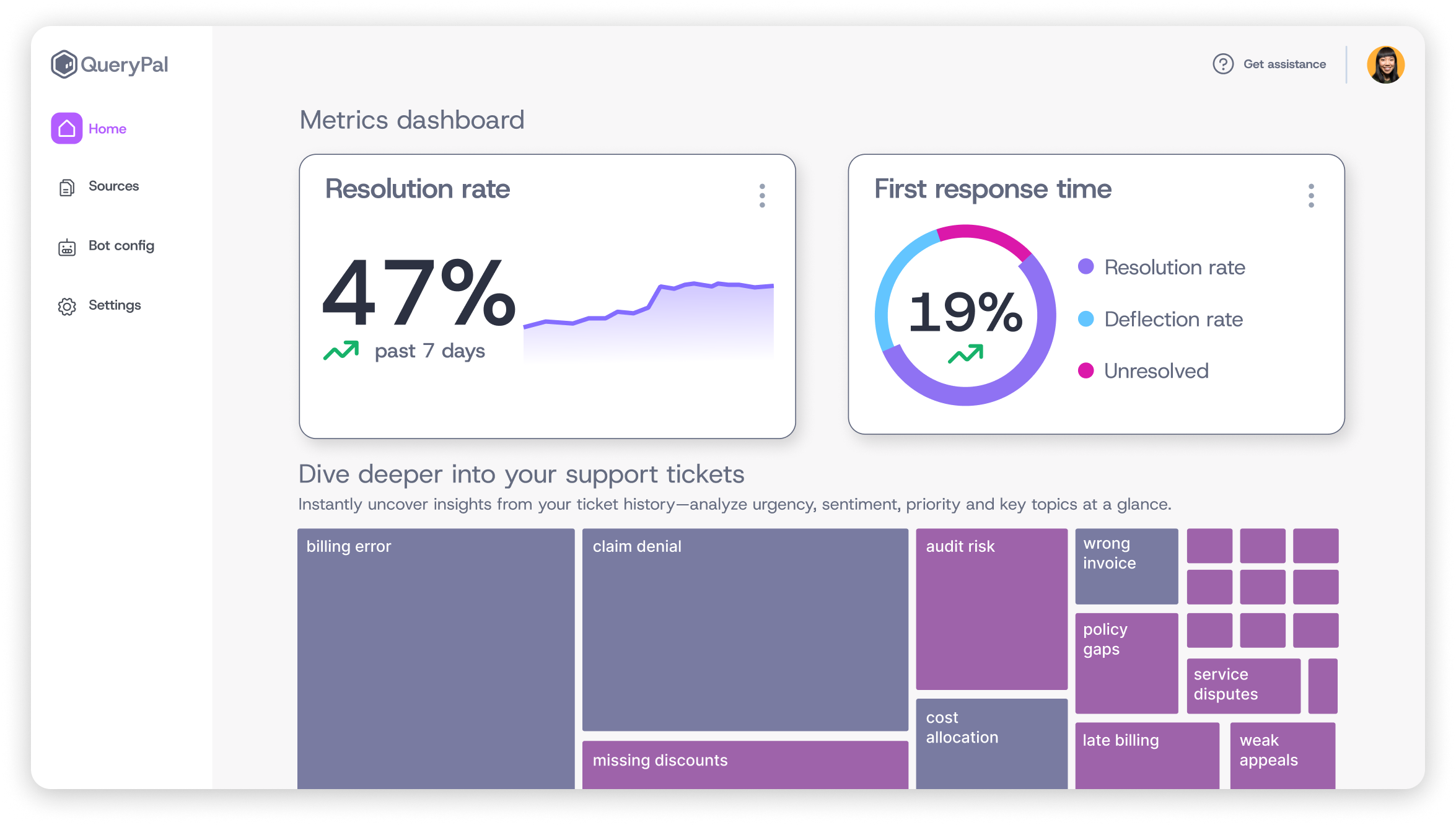
Start tracking leading indicators of burnout with the same discipline. Start with absenteeism rates and voluntary turnover by cohort, then layer in schedule adherence variance and QA score trends.
Run pulse surveys monthly instead of relying on annual employee engagement surveys that arrive too late to prevent anything. When you spot patterns forming (a team's absenteeism spikes, QA scores dip across a cohort), intervene early.
Waiting until an agent hands in their notice means you've already lost.
What to Do When an Agent Is Already Burned Out
Prevention is the goal. But if you have agents already deep in burnout, they need a different kind of support.
Severe burnout doesn't resolve with a week off. Recovery takes time, and it stalls when the underlying work environment stays the same.
The first step is acknowledging the problem directly. Have a genuine one-on-one, not a performance review, about how they're doing and what needs to change.
Practical steps include reducing their caseload, rotating them off high-intensity queues temporarily, and adjusting performance targets during recovery. Some organizations reassign burned-out agents to mentoring, training, or quality review roles for a period, keeping them engaged in meaningful work as the pressure drops.
Individual support without systemic change just delays the next cycle. An agent who recovers and returns to the same conditions will burn out again.
Burnout Won't Fix Itself. Your Systems Might.
Call center burnout is expensive, widespread, and not slowing down. But the research is clear. It's preventable when you treat it as a systems design problem rather than an individual resilience problem.
That means rethinking how you structure workloads, how you measure performance, how you support your managers, and how you use technology to take the repetitive grind off your agents' plates.
If routine tickets are draining your team's energy without building their skills, AI can handle that load.
QueryPal automates repetitive, low-complexity work so your agents can focus on the conversations that need a human touch. Less grind, better outcomes for everyone.

Activate your free
6 week trial
& white-glove integration support.
Cut support costs by 60%, slash response & resolution times, improve your customer experiences, & reduce agent burnout. Find some time with us to show you how.