Client Service Automation for Wealth Management: What to Automate
Client service automation in wealth management should target repetitive, compliance-heavy, and process-driven tasks, while leaving relationship-building, complex advice, and emotionally sensitive conversations in human hands.
By letting digital systems handle repetitive tasks, you can cut manual errors and free your team to focus on what they do best: building relationships.
This isn't about replacing people; it's about empowering them. Keep reading to learn where to start and, more importantly, where to stop.
Why Your Firm Can't Afford to Wait
The math is simple. Operational costs are climbing. Regulatory complexity grows daily. Manual processes drain capacity. Clients expect real-time digital experiences.
If advisors verify documents, they aren't advising. Automation in wealth management digitizes repetitive business foundations.
It turns bottlenecks into workflows and reclaims critical team capacity. A firm that avoids modernization faces strategic disadvantage, scaling difficulties, and fails to meet modern client expectations.
Consider these pressures: Cost Pressure — manual work requires more staff. Regulatory Pressure — rules demand perfect recordkeeping. Client Pressure — digital natives want instant service.
Competitive Pressure — efficient firms lower fees. Smart systems address each point directly, serving as the strategic lever for modern practice management. Waiting risks obsolescence.
The High-ROI Tasks to Streamline First
Not all responsibilities are equal. Prioritize high-volume, rules-based processes first — these activities consume time but add little strategic value. Streamlining them creates immediate capacity and reduces costly manual errors.
Client Onboarding & Documentation
This is the prime target for automation. Manual checks are slow and prone to error. Intelligent systems verify identities quickly, screen against watchlists efficiently, and populate forms in minutes rather than days. E-signature workflows eliminate document chasing entirely.
Key onboarding activities to digitize include identity verification and document collection, anti-money laundering (AML) background checks, risk profile questionnaire processing, account agreement generation and routing, electronic signature collection and tracking, and initial funding and account activation.
"Strict KYC and AML regulations often require multiple document submissions and lengthy verification steps, leading to abandonment rates as high as 70–80%."
Your team gains valuable hours while client first impressions improve dramatically. The same principle shapes how clients perceive your firms long before they speak to an advisor. Getting it right from the first interaction sets the tone for the entire relationship.
Portfolio Operations & Reporting
Rule-based portfolio rebalancing is ideal for wealth automation. Set your triggers and thresholds, and the platform executes trades seamlessly — ensuring discipline while improving timeliness.
For reporting, wealth management technology solutions aggregate data from multiple sources, generate accurate performance statements, and prepare tax documents with precision.
Reporting responsibilities perfect for digitization include daily portfolio performance aggregation, custom client report generation, tax lot accounting and gain/loss statements, rebalancing trade generation and execution, dividend and distribution tracking, and fee calculation and billing statements.
This eliminates tedious spreadsheet work and can reduce reporting errors by 90%. Clients receive consistent information faster.
Compliance & Communications Governance
Regulatory document production drains resources. Robotic process automation in wealth management standardizes this critical function — pulling data to generate required filings while maintaining a complete audit trail.
For client interactions, tools like QueryPal help ensure all exchanges — from emails to secure messages — are captured, archived, and available for supervisory review. This turns a reactive headache into a proactive, manageable process.
Essential regulatory responsibilities to digitize include filing preparation and submission, communications surveillance and archiving, books and records maintenance, annual review documentation, conflict of interest monitoring, and continuing education tracking.
Scaling Technology Across the Firm
Once initial pilots succeed, firms can scale strategically using a solid wealth management technology platform. Not every department needs the same level of digital processing — prioritize areas with the highest volume and lowest complexity first.
Key actions for scaling include sequencing rollouts by department and responsibility complexity, continuously monitoring KPIs to identify new high-value opportunities, updating internal training as new workflows are introduced, and maintaining oversight to prevent errors or regulatory gaps.
For a deeper look at how AI use cases in financial services translate into real operational gains, it's worth reviewing how firms in adjacent sectors have structured their rollouts — the playbook is often directly transferable.
Explore AI use cases in financial services for a practical breakdown.
Unlocking Predictive Insights Through Scaled Technology
Once digital systems are successfully scaled, organizations can move beyond process efficiency to strategic intelligence.
Technology in wealth management provides consistent, clean data that can feed predictive analytics, enabling advisors to anticipate needs rather than react to them. This is where the high-tech, high-touch model truly shines.
Using Smart Systems to See Ahead
After technology is deployed widely, the organization can use the data it collects to predict what clients need next. Platforms can spot life changes like retirement, college costs, or liquidity needs — advisors can reach out early with proactive advice.
If someone changes how they use their accounts, intelligent alerts notify the advisor to help avoid problems. Predictive insights also show when investments need adjusting so advisors can act fast and stay disciplined.
Meanwhile, technology frees up time so staff resources can be assigned to clients who need the most attention while routine responsibilities remain streamlined.
To implement predictions effectively: bring all portfolio data together, pick key events to watch for (like large withdrawals or market shifts), train advisors to use alerts in real conversations, and keep checking the predictions to make continuous improvements.
When technology and predictions work together, advisors can act first rather than just react — clients feel cared for, and the firm becomes stronger and smarter.
Where Technology Becomes a Liability
Even the most advanced most sophisticated platforms fail when applied to nuanced human interactions.
Relationships need trust, empathy, and sophisticated judgment — traits that cannot be coded.
Misapplied technology damages confidence, wastes resources, and creates risk.
Complex Financial Planning
Bespoke estate strategy needs human understanding. Retirement modeling requires behavioral insight. Algorithms crunch numbers efficiently but cannot interpret fears or legacy desires.
Scenarios requiring human advisors include multi-generational estate planning with family dynamics, business succession planning for entrepreneur clients, divorce or inheritance windfall management,
special needs trust establishment and oversight, charitable giving strategy development, and retirement income strategy with behavioral coaching. These conversations demand advisors who can listen, empathize, and co-create plans.
Crisis Communication & Emotional Support
Volatile markets create anxiety. Digital emails about volatility feel impersonal and can actually increase fear. Human advisors provide emotional ballast — reassurance, context, and reinforcement of long-term strategy.
"Unpredictable negative events generate stronger fear responses than predictable ones, explaining why volatile markets create more anxiety than steadily declining ones."
Situations needing human response include personal crises (health, job loss), geopolitical events affecting portfolios, major tax law changes, family emergencies requiring liquidity, and behavioral panic during volatility.
Human touch turns panic into opportunity and strengthens the relationship foundation.
Ethical Oversight & Fiduciary Judgment
Conflicts of interest need ethical reasoning. Suitability assessments demand judgment. Areas requiring human ethical oversight include conflict of interest identification and resolution,
material nonpublic information handling, complex product suitability determinations, fee structure fairness assessments, capacity and vulnerability evaluations, and regulatory gray area navigation. Fiduciary duty is profoundly human — it cannot be delegated to software responsibly.
Building a Hybrid "High-Tech, High-Touch" Model
The goal is brilliant augmentation, not full replacement. Winning models use your CRM and other wealth management systems for data foundations while giving human advisors informational superpowers.
The hybrid model operates across three layers: a Technology Layer that handles data aggregation, routine responsibilities, and surveillance; an Analytics Layer that provides insights, predictions, and alerts; and a Human Layer that delivers judgment, empathy, and relationship management.
Key integration points for success include CRM platforms connected to analytics infrastructure, portfolio management linked to exchanges, regulatory tools integrated with document management, reporting infrastructure feeding advisor dashboards, and client portals connected to service workflows.
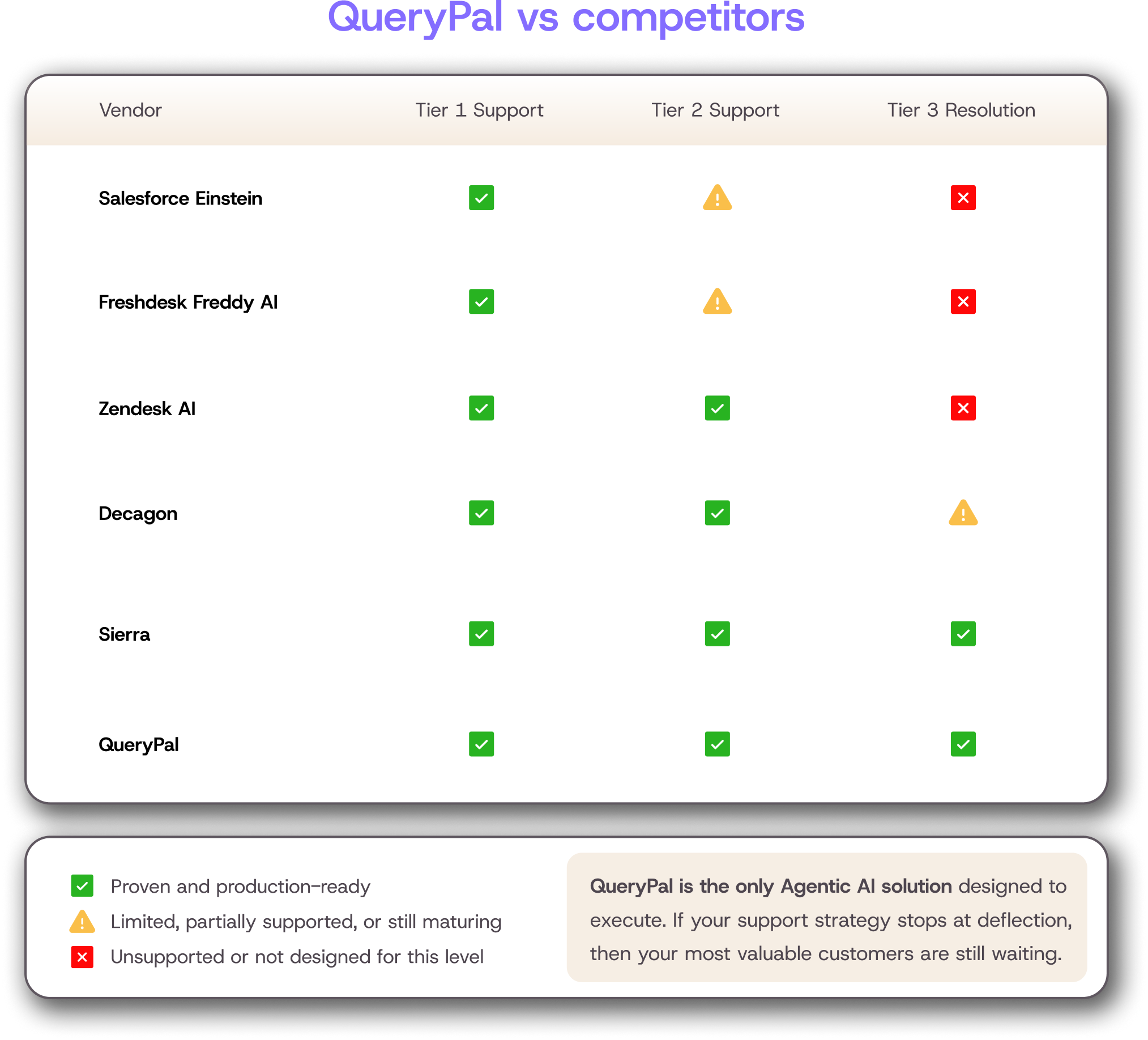
Solutions like Leading CRM platforms — Salesforce — and tools like QueryPal facilitate this seamlessly, creating intelligence layers across operations.
For firms evaluating how to structure client-facing service at scale,our guide on maintaining the personal touch a scale offers a practical framework for maintaining the personal touch while deploying digital infrastructure underneath.
Governance and Continuous Improvement
Technology in wealth management is not something you set and forget. Regular workflow checks ensure tasks run correctly as rules and data change. Track time saved, errors reduced, and staff capacity freed.
Solicit feedback from both staff and clients — advisors can identify confusing workflows, and clients can report slow or unclear processes. Update rules, workflows, and templates whenever regulations, products, or requirements change.
Assign a person or team to oversee all digital processing activities. Make one manager responsible for workflow audits, have a regulatory officer review critical responsibilities, and schedule regular meetings to discuss updates.
A continuous improvement loop keeps processes updated as rules, markets, and needs evolve. For teams looking to quantify their progress, tools that help calculate customer support ROI can be adapted to measure wealth management automation gains as well.
Critical Implementation Roadmap
1. Conduct a Thorough Process Audit
Map all service workflows completely. Identify the three most resource-intensive processes, time each responsibility meticulously, and document error frequency.
This creates a measurable baseline for success. Audit focus areas should include new client acquisition and onboarding, ongoing account maintenance, regular reporting cycles, regulatory requirements, investment management operations, and billing and fee collection.
2. Select Integrable, Secure Platforms
New infrastructure must communicate with existing systems. Prioritize solutions with robust API connectivity and seamless CRM integration — whether that's a dedicated financial advisor CRM or a broader enterprise platform.
Look for providers with SOC 2 Type II standards and clear data governance policies. For sensitive exchanges and data handling, a platform like QueryPal — built with enterprise-grade security and a self-hosted deployment option — ensures you maintain control.
Firms interested in understanding what self-hosting entails can review what self-hosting involves and whether it fits their Infrastructure.
3. Launch a Controlled Pilot Program
Roll out technology in a single department first. Train a small advisor group thoroughly, gather continuous feedback, and limit risk exposure deliberately
Pilot success factors include clear metrics defined upfront, executive sponsorship, participant selection from early adopters, and honest assessment of challenges encountered.
4. Establish a Meaningful Measurement Framework
Track key performance indicators beyond cost: process completion time reduction, manual error decrease, advisor engagement time increase, and client satisfaction scores. This data proves real ROI and guides future investment decisions.
5. Foster an Adaptive Organizational Culture
Technology changes job roles significantly. Communicate systems as empowerment tools, highlight advisor elevation opportunities, and provide continuous training. When teams see digital tools as allies, adoption accelerates naturally.
Integrating Portals for Transparency and Engagement
Digital portals make service faster, easier, and more engaging. Smart platforms feed these portals automatically so information is always current without manual effort from advisors.
Portals reduce routine inquiries, build trust through transparency, enable secure self-service document management, support regulatory audit needs, and encourage proactive client interaction via alerts and notifications.
Choose a portal that is easy to use on both desktop and mobile. Integration with CRM tools like QueryPal ensures a seamless experience for both clients and staff.
For teams evaluating whether their current service approach is keeping pace with client expectations, benchmark framework for the service metrics that drive real outcomes.
Change Management for Advisor Adoption
Tech adoption succeeds only when advisors understand its value and feel empowered. Communicate clear benefits and demonstrate time saved.
Provide hands-on training and access to support resources. Highlight success stories from early adopters and create forums for advisors to suggest improvements and share tips.
The Strategic Imperative for Growth
Implementation begins with a single step. Streamline one high-friction process first. Let platforms handle predictable responsibilities efficiently and enable people to master complex challenges.
Intelligent processing redefines service delivery, creates sustainable competitive advantages, and builds future-ready practices.
Book a demo with QueryPal to see how intelligent systems can transform your wealth management service delivery.
References
[1] Congressional Research Service. "Artificial Intelligence and Machine Learning in Financial Services." Congress.gov, Library of Congress, 3 Apr. 2024,
www.congress.gov/crs-product/R47997
[2] "What Is an Automated Wealth Manager?" University of North Carolina Pembroke Online, Accessed 18 Feb. 2026.
online.uncp.edu/degrees/business/mba/financial-services/what-is-an-automated-wealth-manager/

Activate your free
6 week trial
& white-glove integration support.
Cut support costs by 60%, slash response & resolution times, improve your customer experiences, & reduce agent burnout. Find some time with us to show you how.