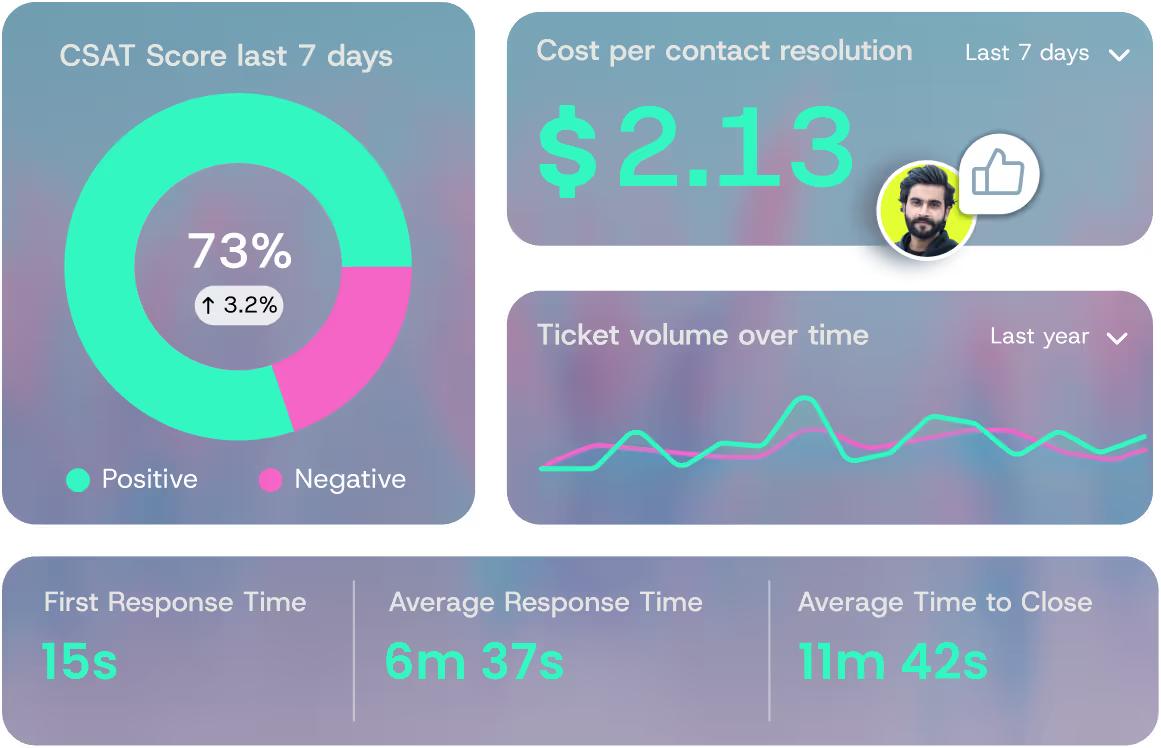
Key Factors That Decrease Customer Satisfaction in 2026
Customer satisfaction scores are slipping across almost every industry right now, and the factors that decrease customer satisfaction are more predictable than most support leaders admit.
The cause is almost always a stack of small, repeatable problems inside the support operation. Slow responses. Inconsistent answers. Ticket handoffs that lose context. A help center that dead-ends. A chatbot that loops.
Fix those and you fix most of what is dragging your CSAT down. Below are the factors that decrease customer satisfaction most in 2026, why each one matters more now than it did two years ago, and what modern support teams are doing to remove them.
The State of Customer Satisfaction in 2026
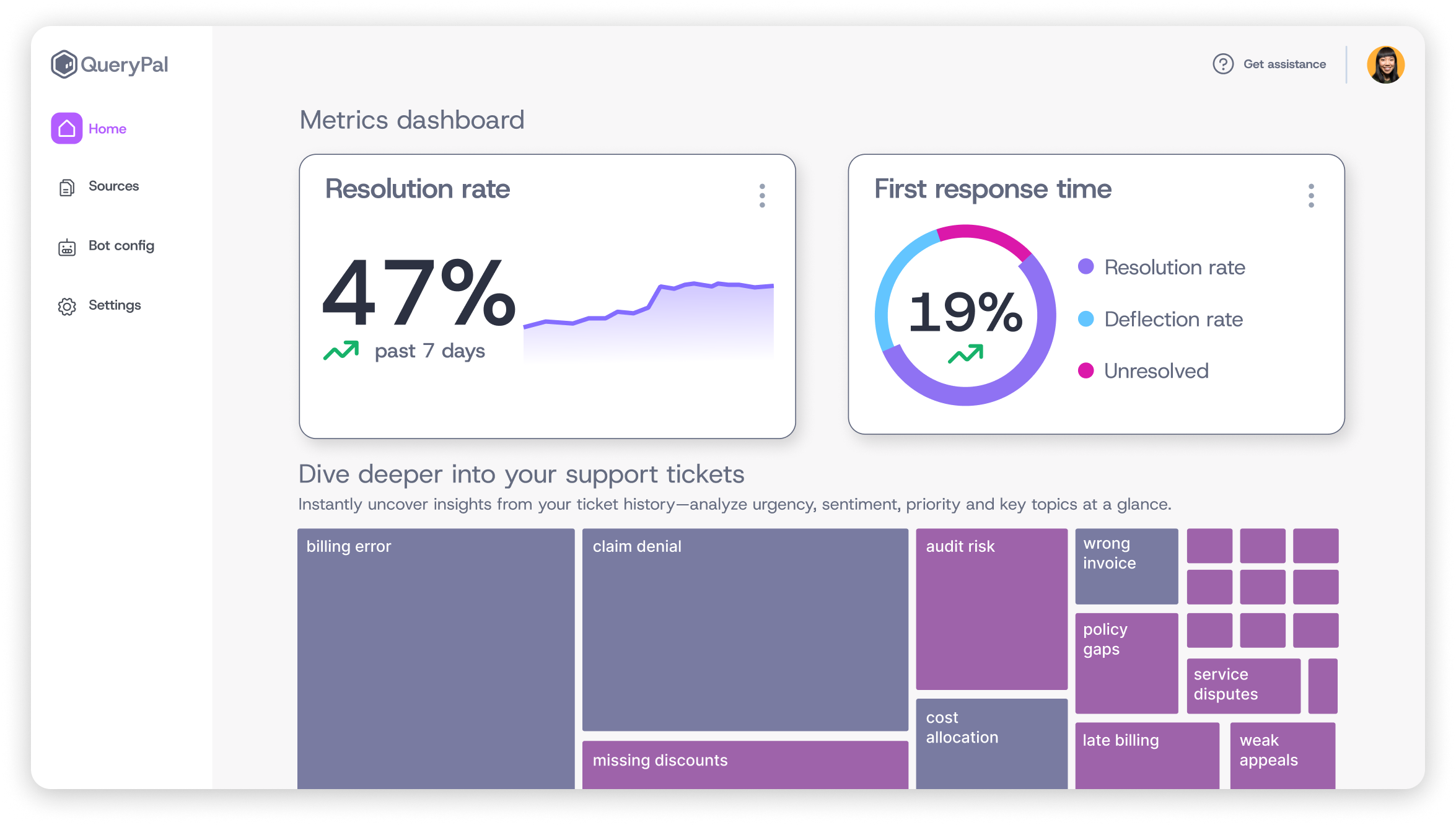
The stakes are higher now than they were two years ago, and the latest customer service statistics show CSAT slipping across nearly every industry.
PwC's Future of Customer Experience research has consistently found that roughly one in three customers will walk away from a brand they love after one poor customer experience.
Cut that trust more than once and they are gone for good, which is why response quality ranks among the top customer retention factors in modern CX.
Here are the customer satisfaction factors that most consistently show up as CSAT killers, ranked by what decreases customer satisfaction the fastest inside modern support operations:
- Slow response and resolution times
- Inconsistent information across channels and agents
- Generic, impersonal interactions
- Repeating the problem to multiple agents
- Broken self-service and dead-end help centers
- Poor handling of escalations
- Ignored customer feedback
- Over-automation without a human safety net
- A gap between product marketing and product reality
Every one of these was a problem in 2024. Three shifts have made them heavier in 2026.
AI-driven support has raised the baseline on customer expectations. Tolerance for friction has dropped as more brands set a faster bar.
And one bad review travels further than it used to, because the same customer can post it in five places before the ticket even closes.
For the deeper numbers behind these shifts, our AI customer service statistics page tracks the latest data on containment, deflection, and CSAT trends.
Slow Response Times and Long Resolution Windows
Slow customer service response times remain the single biggest lever on customer satisfaction, and speed still moves CSAT scores faster than any other change you can make.
Zendesk's CX Trends 2026 report shows response-time expectations tightening across every channel, with chat and social now expected inside minutes and email inside a working day.
Miss those windows and you lose the customer before your agent even opens the ticket.
Most teams optimize the first half of that equation and ignore the second. First response time gets tracked, celebrated, and reported to leadership. Full resolution time gets buried.
The customer, meanwhile, cares more about when the problem is actually solved than when the first canned reply arrives.
Fixing both starts with knowing which is broken. If first response is slow, the issue is usually routing, staffing, or triage.
If resolution is slow, the issue is knowledge, escalation friction, or handoffs between tiers. Different problems, different fixes, though both benefit from ticket deflection tools that resolve the routine cases before they reach the queue.
AI-driven deflection and resolution are now the primary way top teams shrink both windows at the same time.
If you want the practical playbook on the timing side, our guide on how to improve customer response time walks through the specific levers to pull first.
Inconsistent Information Across Channels and Agents
Nothing frustrates a customer faster than inconsistent customer service where three different agents give three different answers to the same question. Chat says one thing. Email says another.
The help center article contradicts both. The escalated agent tells a fourth version that only sort of matches the previous three.
The root cause is almost always the same. Fragmented knowledge bases. Tribal knowledge sitting inside agent heads. No single source of truth that every channel pulls from. And macros last updated two release cycles ago.
Every agent is guessing from their own version of reality, and the customer is the one keeping score.
The fix is unified knowledge that lives in one place, updates in real time, and gets served the same way to every agent, every channel, and every AI layer in your stack. That includes any AI agent you deploy on top.
If your AI pulls from a different KB than your agents, you have not solved the problem, you have doubled it.
For teams already on a modern helpdesk, the fix is usually about wiring the same knowledge into every layer. QueryPal's Zendesk integration is one example of how that gets done without a rip-and-replace project.
Generic, Impersonal Interactions
"Hi [First Name], your ticket has been received" is not personalization. It has not counted as personalization in years, and in 2026 it actively signals that a brand is not paying attention.
Real personalization in support means the customer does not have to re-explain who they are. The agent, human or AI, already knows the past tickets, the plan they are on, the product they use, and the sentiment on the current thread. The response reflects that context in the first line, not the third.
The benefit is more than warmer feelings. It shows up as fewer clarifying rounds, faster resolution, and a customer who feels seen instead of processed. Every layer of the interaction, from the first auto-reply to the escalation note, should carry the same context forward.
Get this right and every other satisfaction factor gets easier. Get it wrong and even a fast, accurate answer lands cold.
Repeating the Problem to Multiple Agents
Ask a customer what infuriates them most in support and this factor wins nearly every time. Customer effort research has been telling us the same story for over a decade.
Reducing customer effort drives customer loyalty far more than any surprise or delight tactic. Repeating your problem to a stranger is pure effort.
The operational cause is almost never a training problem. It is a continuity problem. Warm transfers lose context. Handoffs happen without notes.
The escalated agent inherits the ticket cold and has to start discovery from scratch. Every handoff is another chance for the customer to explain the whole thing one more time.
The fix is context that follows the ticket, not the agent. Full conversation history visible on every open. Notes carried over from every previous touch.
AI that summarizes the situation for the next human before they read a word. That research holds up in 2026, and the technology to fix the underlying customer effort score problem finally does too.
Broken Self-Service and Dead-End Help Centers
Customers say they prefer self-service. Then they open a help center and give up in short order.
Both statements are true. The stated preference is real, but the delivery gap between self-service and true case deflection is worse than most teams realize.
Broken self-service usually looks like some combination of the same problems. Outdated articles that reflect a version of the product from two releases ago.
Search that returns 30 results with no clear best answer. No feedback loop on what solved the problem and what did not. And an escalation path so buried that customers give up and start a fresh ticket from scratch.
The fix is a help center that reflects live product state, an AI agent that can answer inside the same session when the article does not, and a one-click path to a human when neither of those works.
If you want the deeper version of this argument on customer self-service problems, our guide on what ticket deflection actually is covers where teams get it wrong.
Self-service is not a place to send customers so you do not have to talk to them. It is a product. Treat it that way.
Poor Handling of Escalations and Angry Customers
The escalation moment is the hinge of the entire relationship. Handle it well and you turn a frustrated customer into a promoter. Botch it and you create a public detractor who spends the next month telling everyone about it.
Escalations get botched for operational reasons more than emotional ones. No clear ownership once the ticket leaves Tier 1.
No visibility into what has already been tried. Agents who inherit the ticket cold and have to guess at what the last agent already ruled out. The customer, meanwhile, is now waiting on a stranger to catch up on their own case.
Good customer complaint handling follows a simple pattern. Acknowledge that the customer is frustrated and that you have the full history.
Take clear ownership so the customer knows exactly who is on it. Resolve with the same context the previous agents had. Follow up to confirm it stuck.
Automation belongs in the front half of that pattern, human judgment in the back half. Draw that line deliberately, not by accident.
Ignored Customer Feedback
Every unread survey is a small betrayal. Customers who feel heard tolerate more mistakes. Customers who feel ignored churn faster. And most teams collect enough feedback to notice both patterns, then do nothing with either.
Two failure modes dominate. The first is not collecting feedback at meaningful moments. A post-resolution survey is useful. A post-onboarding survey is useful. A quarterly relationship pulse is useful. A generic annual NPS sent to a stale list is not.
The second is collecting the feedback and never routing insights to the teams who could act on it. Support gets the raw data. Product never sees the top three pain points. Ops never hears about the recurring escalation triggers. The signal dies inside the survey tool.
The operational fix is quick-cycle feedback loops. Survey after every resolved ticket. Tag every failed containment. Review the trends every week with product and ops in the room, not just the support lead. And kill the surveys nobody ever acts on.
Over-Automation Without a Human Safety Net
Bad automation makes satisfaction worse, not better, and years into the evolution of chatbots most support teams still get the tradeoffs wrong. A chatbot that loops the same three responses.
A menu with no path to a person after 11 p.m. An AI that cheerfully misidentifies the issue and closes the ticket. A confidence score that reads "resolved" when the customer just gave up.
The failure mode is almost always the same. The AI does not know when it is stuck, and there is no clean handoff to a human with full context when it is. Customers hate AI that traps them, not AI itself.
Good automation clears a different bar. It knows the boundaries of what it can solve and hands off before frustration builds. The full conversation moves forward with it, so the human agent does not restart discovery.
And it resolves confidently on the tickets it should own while escalating cleanly on the ones it should not.
This is a design and platform choice, not a fundamental problem with AI.
The teams that got AI wrong in 2024 are not the teams still struggling in 2026.
Most of the difference is where they drew the line between automation and human judgment.
Product-Reality Gap and Unmet Expectations
Not every satisfaction problem starts inside support. Some of it is inherited. Marketing that oversells a feature. Sales that overpromises a timeline. Onboarding that skips the parts customers actually needed.
Documentation that never caught up to the last release. By the time the customer opens a ticket, they are already disappointed for reasons the support team did not cause and cannot fully fix.
Support can manage the fallout, but the real cure is cross-functional. Honest product marketing that describes what the product actually does, not what it aspires to.
Sales conversations that align on capabilities and timelines instead of hoping the gap closes later. Onboarding that closes the expectation gap early, before the first support ticket appears.
Track the ticket categories that trace back to expectation gaps. Route those insights to marketing, sales, and product every month. Fix the source and the tickets drop.
How Modern Support Teams Fix These Factors
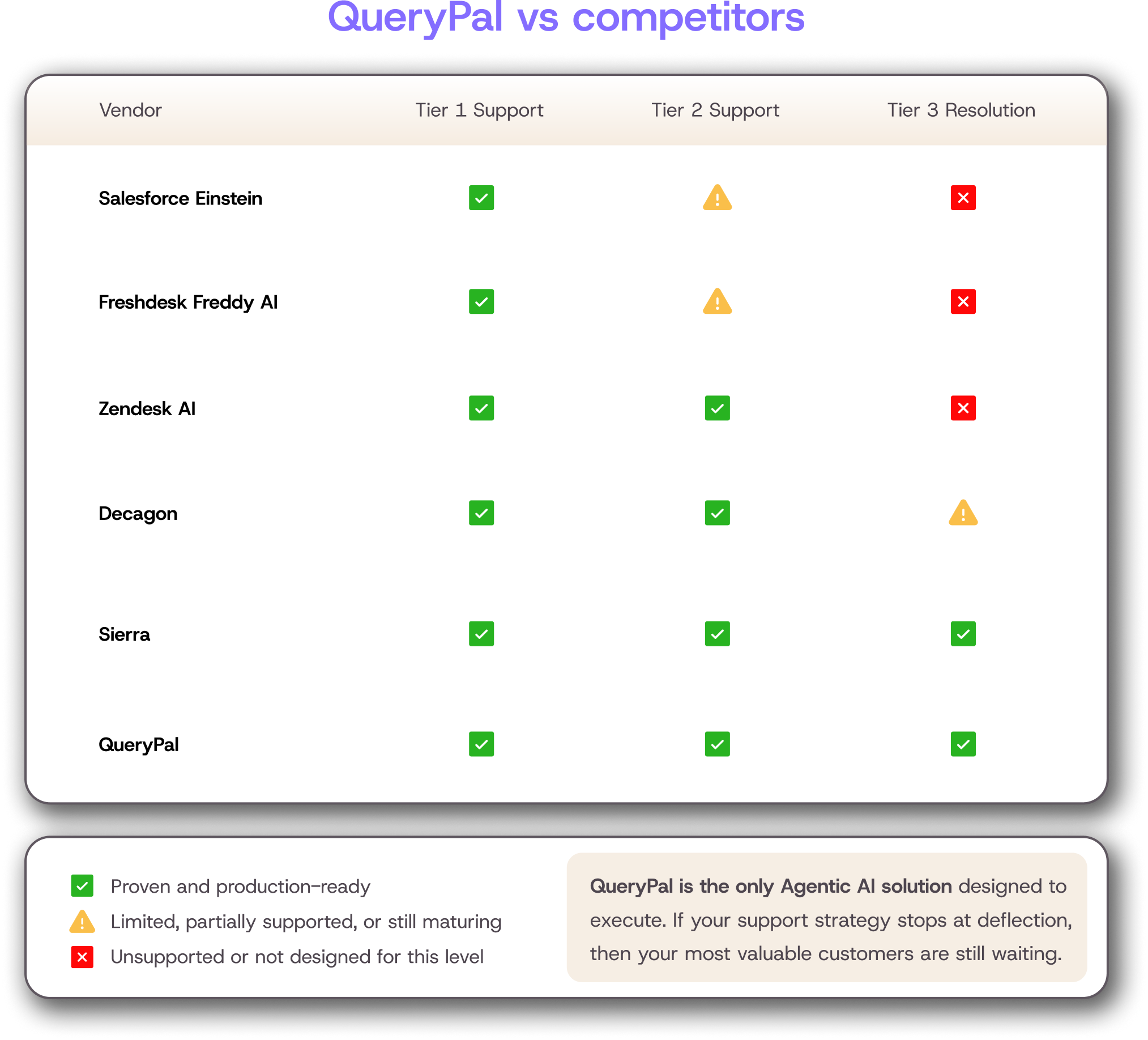
Most of the customer service pain points above share a shape. Slow response, inconsistent info, generic replies, repeating the problem, broken self-service, botched escalations, over-automation. Different symptoms, same root cause. Knowledge and context are not moving fast enough through the support operation.
That is the gap QueryPal was built for. QueryPal is an agentic AI customer service platform that plugs into the helpdesk your team already uses, scans your documentation, past tickets, and workflows, and generates accurate, context-aware responses that resolve complex issues instead of just deflecting them.
The point that matters for most support leaders is the integration approach. QueryPal augments the existing stack, it does not replace it.
Teams stay on Zendesk, Intercom, Salesforce, Front, Gorgias, Help Scout, or Freshdesk and layer resolution-focused AI on top. No rip-and-replace project. No new agent workflow. The AI reads the same source of truth your agents read and answers with the same context they would have.
For security-conscious teams, QueryPal is SOC 2 Type 2 compliant and offers a self-hosted deployment, so sensitive ticket data never leaves your environment.
That is a real gap in most AI support tools, and it is one reason teams handling regulated data pick a platform they can run inside their own stack.
That approach maps directly onto the factors above. Speed goes up because AI handles the routine work end to end. Consistency goes up because every layer pulls from the same knowledge. Personalization improves because context follows the customer.
Handoffs get cleaner because the AI passes the full history to the human agent when it escalates. And escalations get handled with the full case in hand, not from scratch.
The teams seeing the biggest CSAT lift with this approach share one thing in common. They picked the two or three factors doing the most damage, fixed those first, and let the resolution engine compound the wins from there.
Start Fixing the Factors That Decrease Customer Satisfaction
Do not try to fix all nine factors at once. Pick the two costing you the most CSAT points right now and start there.
For most teams that means slow resolution and inconsistent information, because both cascade into every other factor on this list. Fix the foundations first and the harder work gets easier.
Get the knowledge base clean. Wire it into every channel and every AI layer. Set clear ownership on escalations and cut the handoffs that leak context. Once those are stable, the personalization and self-service work gets easier because the foundation underneath finally holds. Each of those fixes maps to the helpdesk best practices that high-performing support teams standardize.
If you want to see what a resolution-first AI layer looks like inside your existing helpdesk, book a QueryPal demo focused on the specific factors dragging your CSAT down.
We will map QueryPal to the two or three factors costing you the most today, walk through how it plugs into Zendesk, Intercom, Salesforce, or whichever helpdesk you already run, and give you a clear read on what resolution, deflection, and CSAT lift look like inside your queue.
Customer Satisfaction FAQ
What Are the Main Factors That Decrease Customer Satisfaction?
The most common factors are slow response and resolution times, inconsistent information across channels, generic and impersonal interactions, forcing customers to repeat the problem to multiple agents, broken self-service, botched escalations, ignored customer feedback, over-automation without a human safety net, and a gap between what marketing promises and what the product actually delivers.
What Are the 5 Factors of Customer Satisfaction?
The classic five are product quality, service quality, price, expectations, and personal experience.
In support specifically, the five that move CSAT most are response time, resolution accuracy, effort required, personalization, and how well escalations get handled. Those service factors are what your team controls directly.
What Are the 3 C's of Customer Satisfaction?
The 3 C's are consistency, customer journey, and customer-centricity. In practice, consistency means the same accurate answer across every channel.
Customer journey means friction stays low across the full experience, not just the good parts. Customer-centricity means every decision inside the support operation starts with the customer's outcome, not internal metrics.
How Does AI Customer Service Improve Customer Satisfaction?
Modern AI support agents improve satisfaction by resolving common issues end to end instead of just deflecting them, shrinking response and resolution times, carrying context between channels so the customer does not have to repeat themselves, and handing off cleanly to a human when the case actually needs one.
The gains show up as higher CSAT, higher first contact resolution, fewer angry escalations, and lower agent churn from the burnout of repetitive work.

Activate your free
6 week trial
& white-glove integration support.
Cut support costs by 60%, slash response & resolution times, improve your customer experiences, & reduce agent burnout. Find some time with us to show you how.